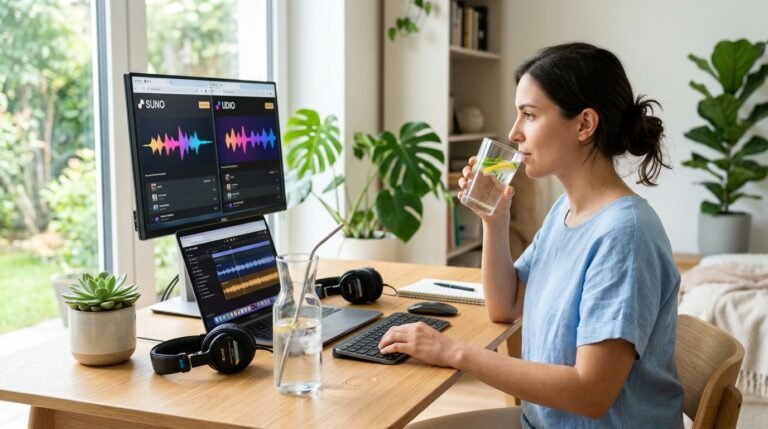

- Suno is the best all-round AI music generator in 2026 — full songs with vocals in under 90 seconds.
- Udio wins on audio quality and licensing safety (Universal + Warner deals).
- Riffusion is the best free option, with unlimited full songs and MP3 downloads.
- AIVA is the specialist pick for cinematic and orchestral music with MIDI export.
- No major tool grants commercial rights on its free tier — you must be on a paid plan when you generate.
AI music generators have crossed the line from gimmick to genuinely useful. In 2026 you can type a sentence like “lo-fi hip hop with rainy vibes and soft piano” and get back a complete, professionally mixed track with vocals in about a minute. The question is no longer whether AI can make a song, but which AI music generator fits your workflow, budget, and, crucially, your commercial rights needs.
I’ve spent months testing the major platforms side by side, generating hundreds of tracks. This guide breaks down the 7 best AI music generators in 2026, what each one does best, real pricing, and the licensing traps that catch creators off guard.
Best AI Music Generators 2026: Quick Comparison
| Tool | Best For | Free Tier | Paid From |
|---|---|---|---|
| Suno | Best overall | Yes (no commercial rights) | $10/mo |
| Udio | Best audio quality + licensing | Yes | $10/mo |
| Riffusion | Best free generator | Yes (unlimited, MP3) | $6/mo |
| AIVA | Cinematic + orchestral | Yes | ~$15/mo |
| Stable Audio | Sound design + instrumentals | Yes | $12/mo |
| ElevenLabs Music | Vocal realism | Yes | Varies |
| Soundraw | Royalty-free background music | Trial | ~$17/mo |
1. Suno: Best AI Music Generator Overall
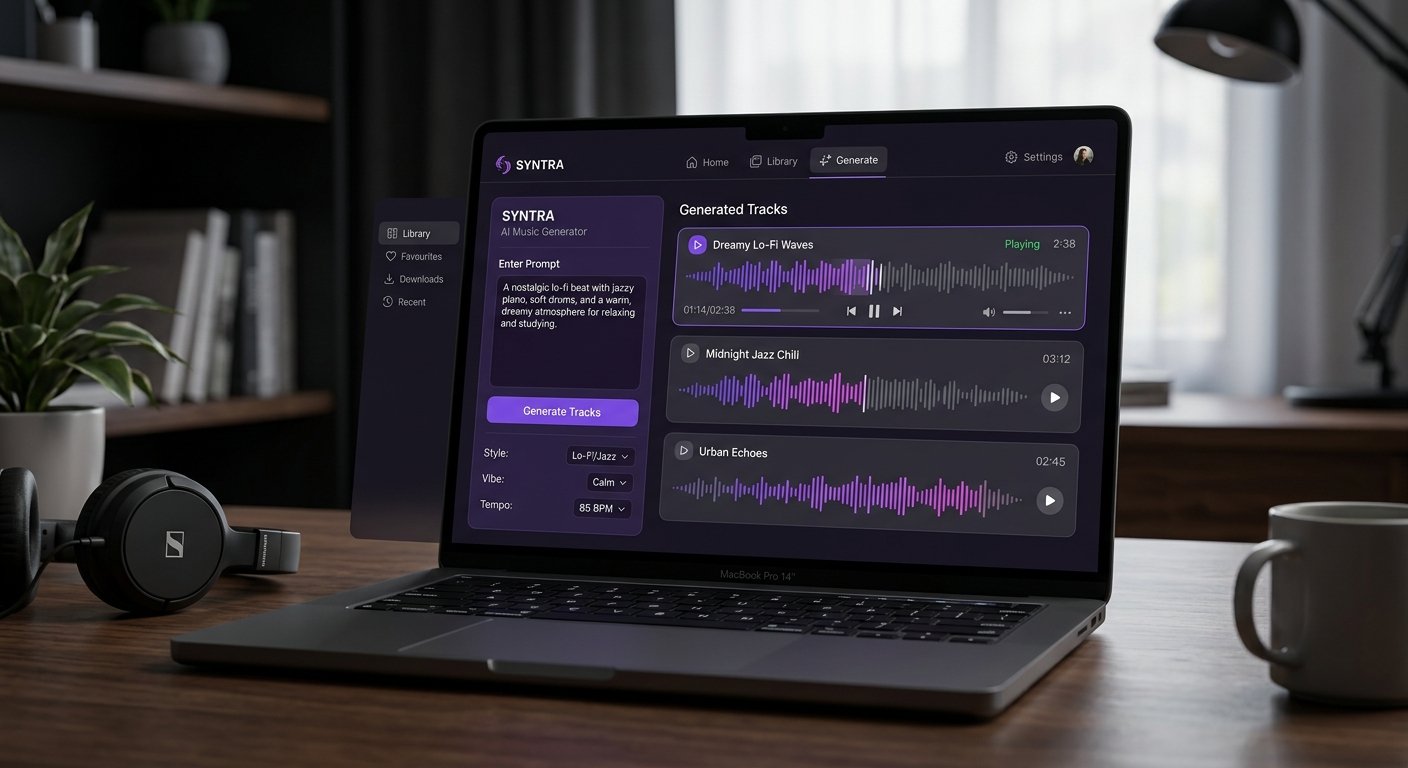
Suno is the default answer when someone asks for the best AI music generator in 2026, and the market agrees. The company raised $400 million at a $5.4 billion valuation in June 2026, and had surpassed 2 million paid subscribers with roughly $300 million in annual recurring revenue by early 2026, as reported by TechCrunch. Nearly 100 million people have tried it.
What makes Suno the best AI song generator is the combination of accessibility and depth. A total beginner can type a prompt and get two full songs, complete with vocals and lyrics, in 30 to 90 seconds. But Suno also ships serious tools: stem extraction, MIDI export, an audio-upload feature that lets you build a song around a hum or an old demo, and Suno Studio, a built-in DAW-style workspace for editing tracks without leaving the app.
The V5 update pushed vocal realism to a level that passes casual listening tests, especially for English-language pop, rock, and hip-hop. Suno also secured a licensing partnership with Warner Music Group in late 2025, which is slowly clarifying its commercial-rights story.
Who should use it: anyone who wants the most capable all-round AI music generator, from hobbyists to content creators to indie musicians building real tracks.
Watch out for: commercial rights require a paid plan at the time of generation. If you make a track on the free tier and it goes viral, upgrading later does not grant retroactive rights. Suno also remains in active litigation with Universal Music Group and Sony Music as of 2026.
Pricing: free tier (personal use only), Pro at $10/month, Premier at $30/month with 10,000 credits, stem export, and Suno Studio.
Suno
Full songs with vocals in under 90 seconds, stem export, MIDI, and a built-in DAW. The most complete AI music platform in 2026.
Try Suno2. Udio: Best Audio Quality and Licensing Safety
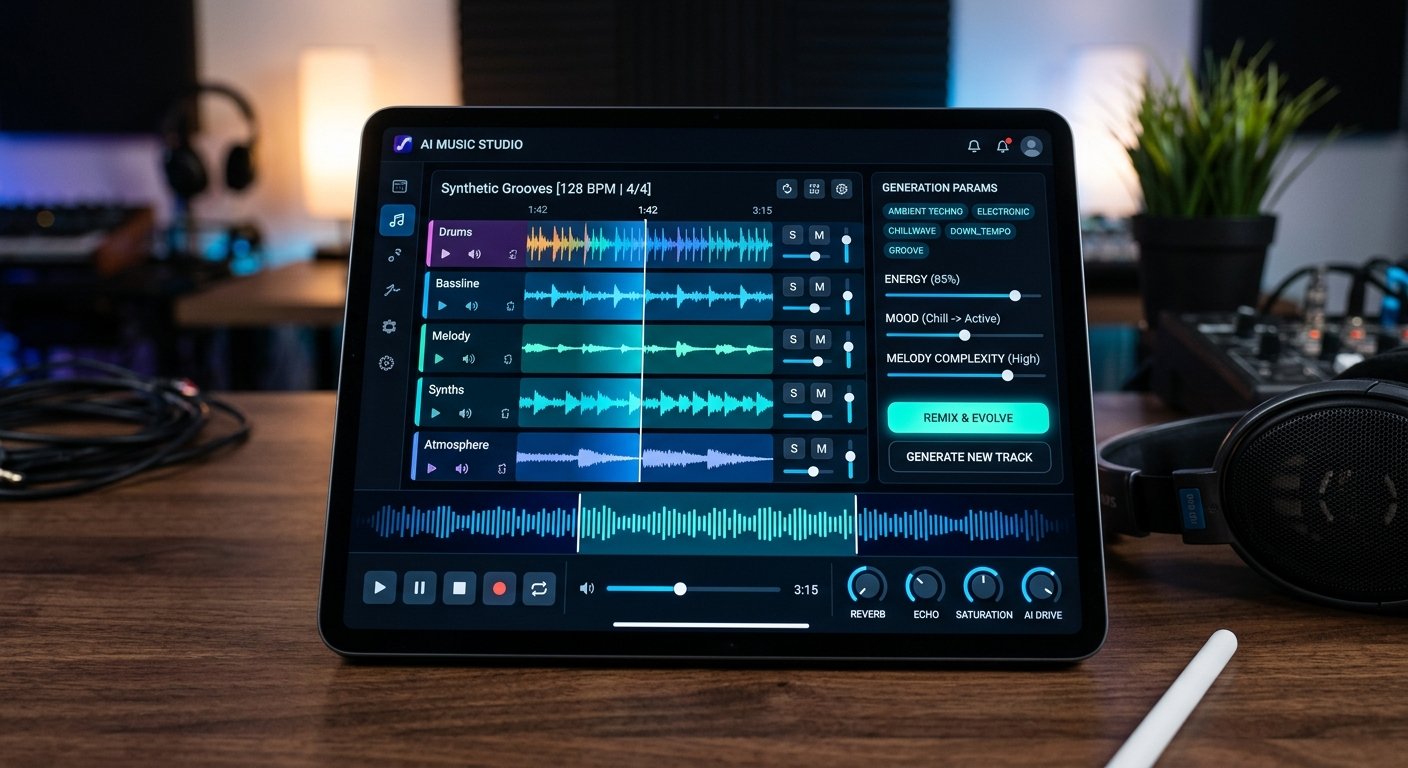
If Suno is the default, Udio is what serious creators switch to when they want more control and cleaner licensing. Built by former Google DeepMind researchers, Udio consistently rates above Suno in community blind tests for raw audio quality, especially on complex arrangements and subtle vocal styling.
Udio’s biggest 2026 advantage is licensing. It became the first AI music platform to sign a licensing deal with Universal Music Group in October 2025, followed by Warner Music, Merlin, and Kobalt in early 2026. For anyone worried about the copyright cloud hanging over AI music, Udio has the cleanest story on the market.
Udio also excels at editing control: precise genre and instrument tags, section-by-section extension, and a strong remix workflow. It supports vocals in multiple languages, making it a favorite for international creators.
Who should use it: producers who prioritize audio fidelity, want deep remix and structure control, or need licensing peace of mind for commercial work.
Watch out for: the big catch in 2026 is that Udio’s UMG-licensed platform keeps outputs inside a walled garden. On some tiers you cannot download or share tracks outside Udio itself, which is a dealbreaker if you need the WAV file for a DAW or distribution.
Pricing: free tier, Standard at $10 to $12/month, Pro at $30 to $36/month.
Udio
Label-licensed AI music with the cleanest copyright story, top-rated vocal quality, and the strongest remix and editing controls.
Try Udio3. Riffusion: Best Free AI Music Generator
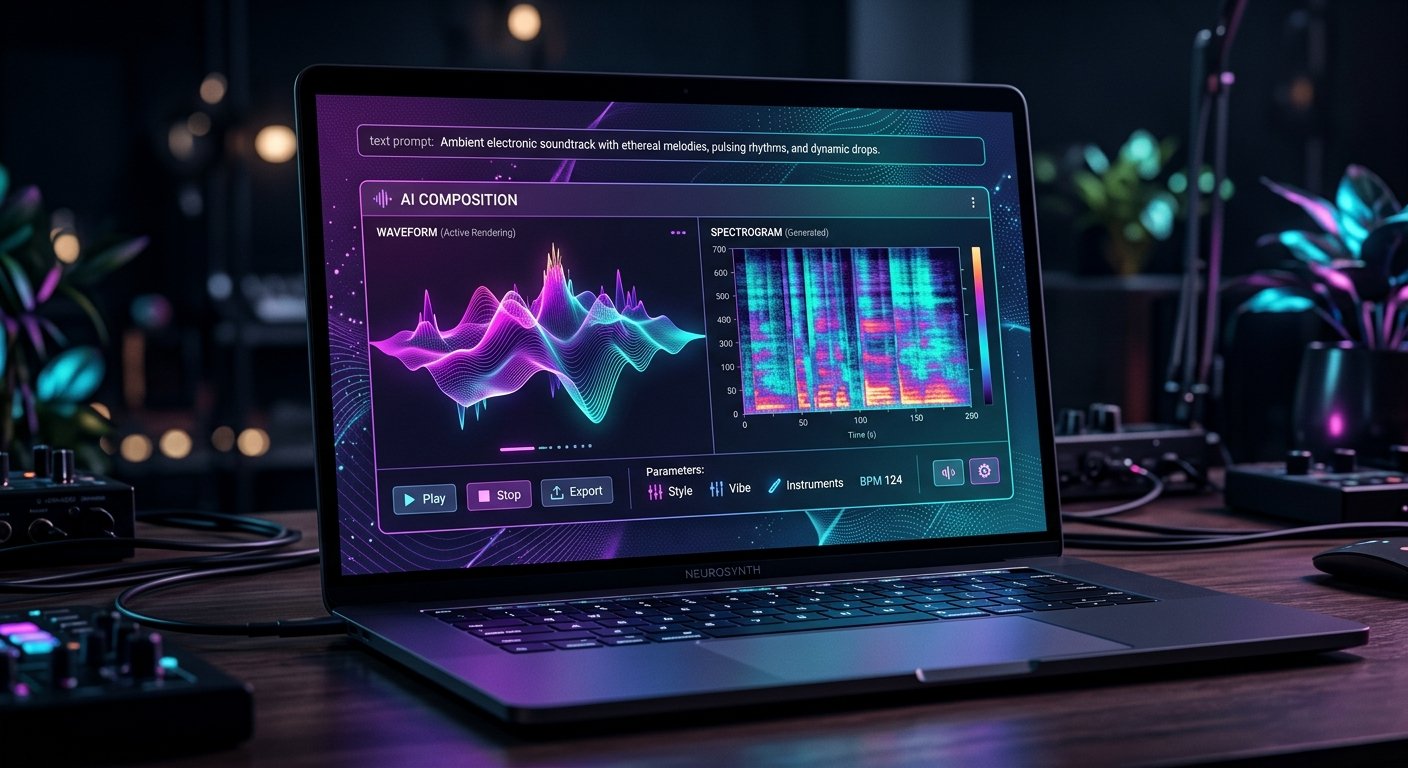
Riffusion is the answer to “what’s the best free AI music generator that actually lets me download songs?” As Suno and Udio tighten their free tiers, Riffusion’s Basic mode keeps offering unlimited full songs with vocals and lyrics, with MP3 downloads included, on a fair-use rate limit rather than a hard daily cap.
Riffusion started in 2022 as a clever hack that generated music as spectrogram images, and has grown into a full text-to-song generator backed by a16z. Free users describe a genre, mood, and instrumentation and get complete tracks, not 30-second clips. The audio quality sits a notch below Suno V5 in blind tests, but for zero dollars the gap is remarkably small.
Its paid Studio mode unlocks faster generation with up to 16 concurrent jobs, WAV and stem export, and editing tools called Extend, Replace, Stem Swap, and Cover for reworking parts of a song.
Who should use it: hobbyists who never want to hit a paywall, and budget creators who need downloadable tracks for free.
Watch out for: audio quality is good but not class-leading, and the free tier’s commercial terms are limited.
Pricing: generous free tier, Starter at $6/month (around 600 songs), Plus at $18, Member at $48.
Riffusion
The rare AI music generator with a genuinely useful free tier: unlimited full songs with vocals and MP3 downloads.
Try Riffusion4. AIVA: Best for Cinematic and Orchestral Music
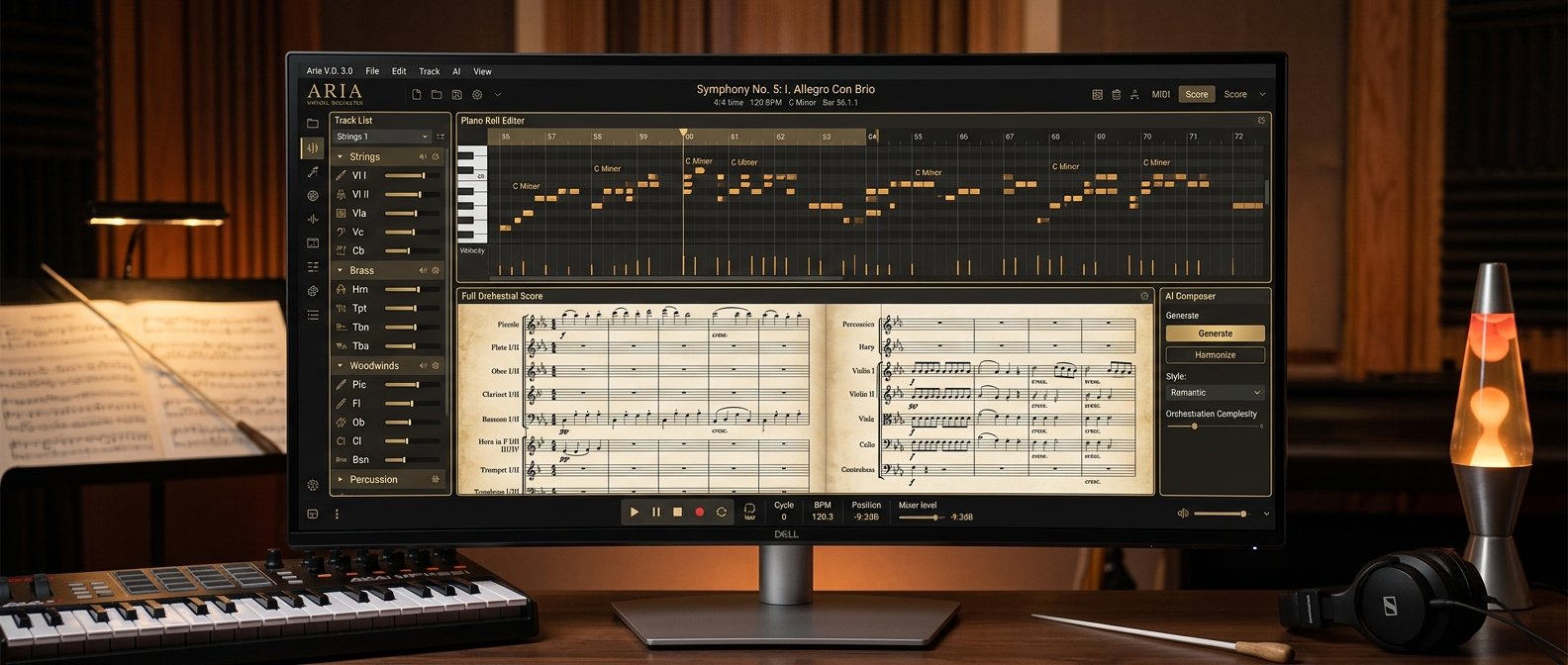
AIVA is the best AI music generator for film scores, game soundtracks, and orchestral compositions. Trained largely on classical and cinematic works, much of it in the public domain, AIVA produces sweeping orchestral pieces that rival human compositions in the right hands.
Where AIVA pulls ahead of Suno and Udio for composers is control. It offers MIDI export on all plans, 250+ styles, and a proper editor UI, so you can take a generated piece into your own DAW and refine every note. The Pro plan also grants full copyright ownership of your output, a rarity in this space.
Who should use it: filmmakers, game developers, YouTubers, and composers who need cinematic or classical instrumental music with full editing control.
Watch out for: AIVA is instrumental-focused, so it is not the tool for vocal pop songs.
Pricing: free tier (with attribution), Standard around $15/month, Pro around $50/month with full copyright.
AIVA
MIDI export on every plan, 250+ styles, and full copyright ownership on Pro. The go-to AI composer for film and game music.
Try AIVA5. Stable Audio: Best for Sound Design and Instrumentals
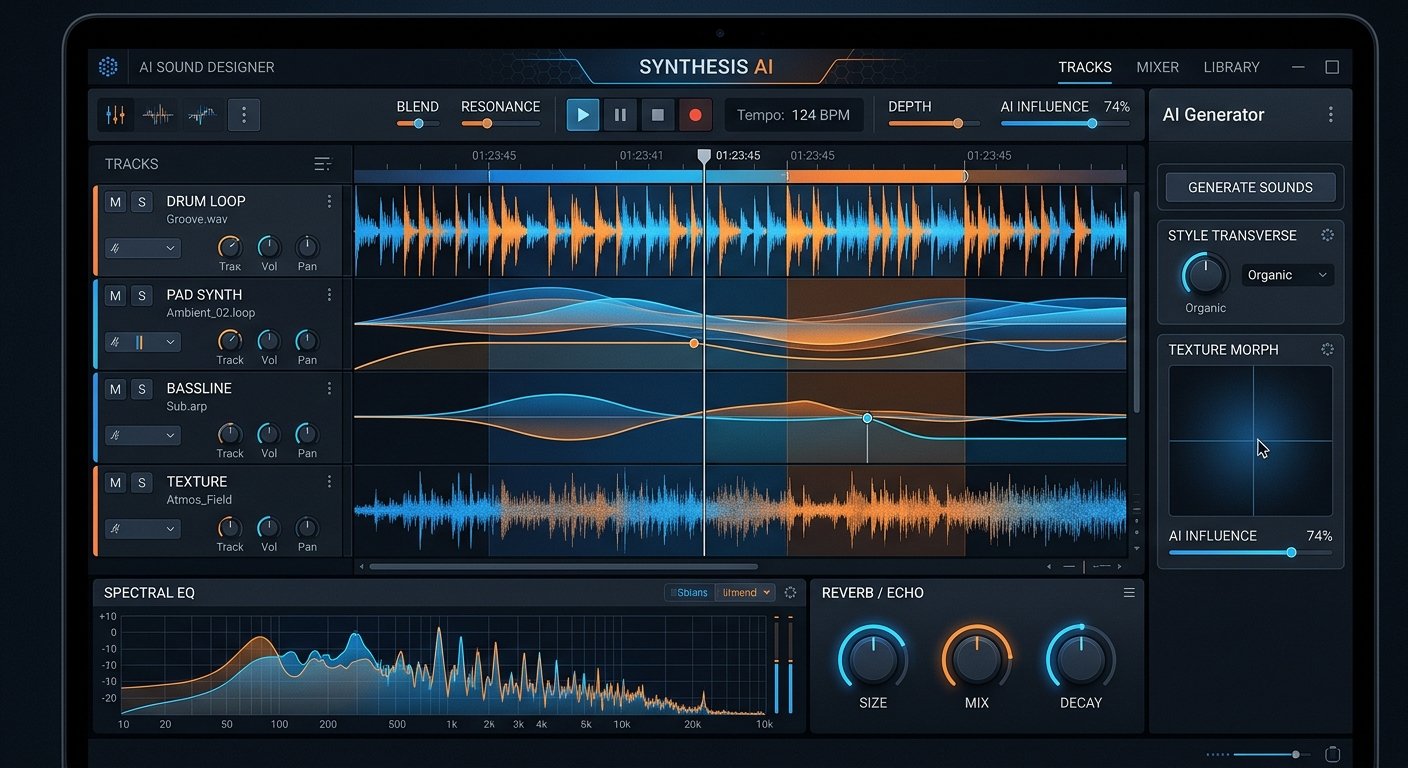
Stable Audio, from Stability AI, is the pick for instrumental beds, sound design, and producers who care about a clean commercial-use license. It is trained on a licensed dataset from AudioSparx and other partners, giving it a clearer commercial-use framework than Suno or Udio.
Stable Audio generates high-quality instrumental tracks up to several minutes long and is popular with developers thanks to its open-weights approach. It is less about full vocal songs and more about loops, textures, ambient beds, and building blocks you drop into a larger production.
Who should use it: sound designers, game and app developers, and producers who need licensed instrumental material.
Watch out for: no full vocal-song generation like Suno or Udio.
Pricing: free tier, paid plans from around $12/month.
Stable Audio
Licensed training data, long instrumental generations, and the cleanest commercial framework for sound design work.
Try Stable Audio6. ElevenLabs Music: Best for Vocal Realism
ElevenLabs built its reputation on the most natural-sounding AI voices in the business, and Eleven Music, launched in 2025, brings that vocal expertise to song generation. You describe a style or mood and it assembles a track, with vocal realism that is among the best in the category.
Because ElevenLabs started as a voice-cloning and text-to-speech company, its generated vocals carry a natural quality that some competitors struggle to match. The platform launched with licensing partnerships and an opt-in marketplace for voice and music creators, and has paid out over $11 million to voice creators to date.
Who should use it: creators who care most about lifelike vocals, and anyone already using ElevenLabs for voiceover work.
Watch out for: it is newer to music than Suno and Udio, so the surrounding toolset is less mature.
Pricing: free tier available, paid plans vary by usage.
ElevenLabs Music
Industry-leading AI vocal realism from the team behind the best AI voices, with licensing partnerships built in.
Try ElevenLabs7. Soundraw: Best for Royalty-Free Background Music
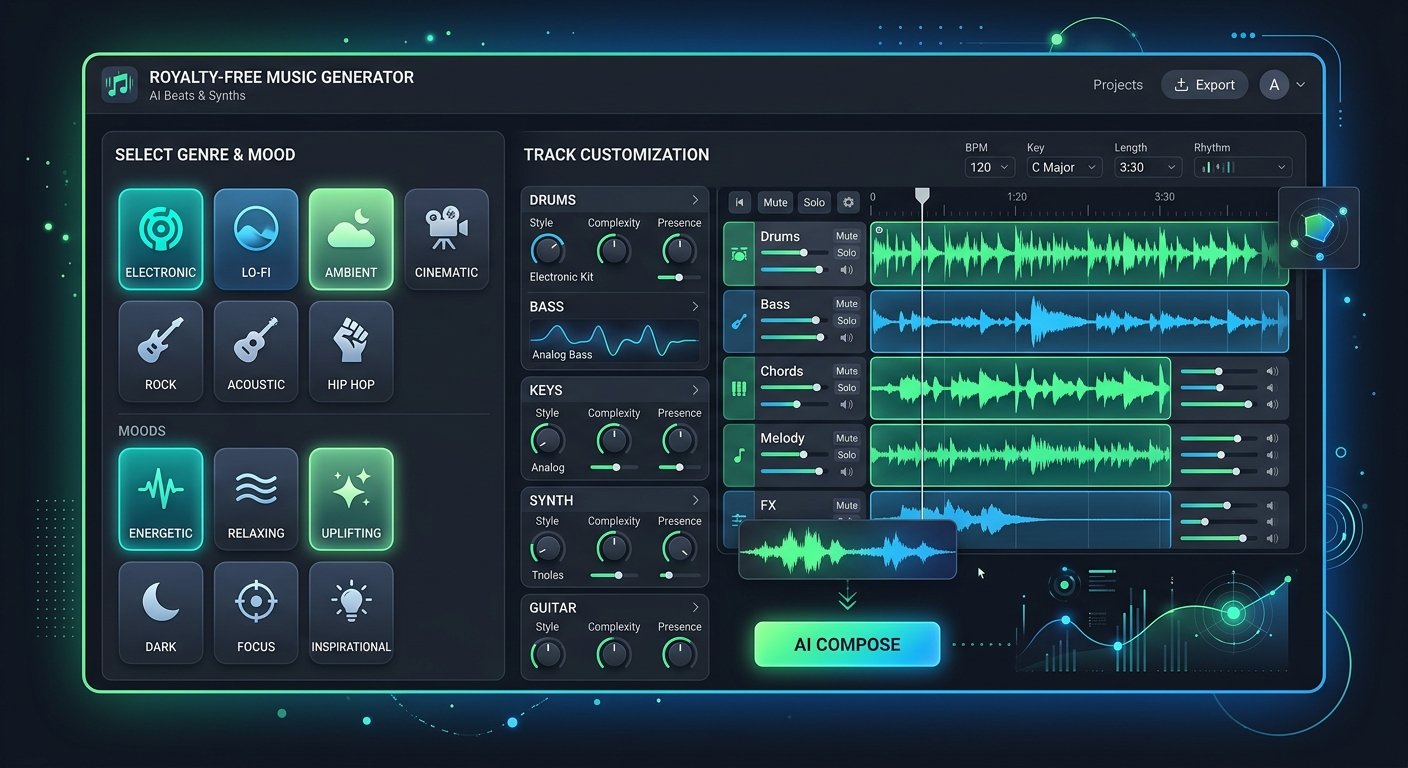
Soundraw is built for content creators who need royalty-free background music without any copyright anxiety. Instead of generating a random track, you pick a mood, genre, and length, and Soundraw builds customizable instrumental music you can tweak section by section.
It is not trying to write the next radio hit. It is trying to give YouTubers, podcasters, and video editors an endless supply of safe, license-clear background music for their projects.
Who should use it: video creators, podcasters, and marketers who need reliable royalty-free background tracks.
Watch out for: instrumental only, and less “wow” factor than a full Suno vocal track.
Pricing: trial available, paid plans from around $17/month.
Soundraw
Customizable, royalty-free background music built for video and podcast creators who need copyright-safe tracks.
Try SoundrawHow to Choose the Best AI Music Generator for You
With so many AI music tools in 2026, the most common mistake is picking based on brand recognition instead of workflow fit. Here is how to narrow it down.
Start with the vocals question
If you need full songs with vocals, lyrics, and production, your real options are Suno, Udio, Riffusion, and ElevenLabs Music. If you need instrumentals, sound design, or background beds, look at Stable Audio, AIVA, or Soundraw. This single question immediately cuts the field in half.
Check the commercial rights trap
The biggest pitfall in AI music is the free-tier commercial-rights trap. No major AI music generator grants commercial rights on its free tier in 2026. If you plan to monetize, you must be on a paid plan at the moment you generate the track. Upgrading afterward does not retroactively license work you made for free.
Can you actually download the file?
Sounds obvious, but it is the defining 2026 story for Udio, whose label-licensed tiers can lock outputs inside the platform. If you need a WAV to mix in your DAW or distribute to Spotify, confirm the plan allows downloads before you pay.
Consider the licensing and legal landscape
For hobby use, the training-data question does not matter much. For commercial sync, label deals, or large-scale distribution, it matters a lot. Udio (UMG, Warner licensed), Stable Audio (licensed dataset), and AIVA (public-domain training) offer cleaner legal footing than tools still in active litigation. The U.S. Copyright Office’s guidance on AI-generated works and human authorship is worth reading before you build a business on any of them.
Match the tool to the job
For speed and iteration, Suno is the fastest to go from idea to listenable output. For deep editing and remix control, Udio wins. For cinematic scoring, AIVA. For free downloadable songs, Riffusion. For background music, Soundraw. Many pros use two tools together: Udio for rapid ideation, then Suno for final quality and stems.
How to Make Your First AI Song
Getting started with any AI music generator follows the same basic flow:
- Pick your tool based on the vocals and rights questions above. For most beginners, start with Suno’s free tier.
- Write a descriptive prompt. Include genre, mood, instruments, and tempo, for example “upbeat indie pop, bright guitars, female vocals, 120 BPM.”
- Add lyrics or let the AI write them. Most tools can generate lyrics from a theme, or you can paste your own.
- Generate and compare. Suno and Udio produce two versions per prompt, so you can pick the stronger take.
- Refine. Extend the track, regenerate sections, or adjust the prompt until it clicks.
- Export as MP3, WAV, or stems, depending on your plan and whether you need commercial rights.
Pair your finished track with our free music tools, like the BPM tapper to match tempos or the song key and BPM finder to key-match your AI song with other tracks. Just starting out with recording too? Our home studio setup guide for beginners covers the gear side.
Frequently Asked Questions
What is the best AI music generator in 2026?
Is there a free AI music generator?
Can I sell music made with an AI music generator?
Suno vs Udio: which is better?
Do AI music generators work for cinematic or background music?
Is AI-generated music copyright-free?
Final Verdict: Which AI Music Generator Should You Use?
For most people, Suno is the best AI music generator in 2026. It is the fastest, most capable, and most complete platform, equally good for a curious beginner and a working producer. If audio quality and licensing safety top your list, choose Udio. If you want the best free AI music generator with real downloads, Riffusion is unbeatable. And for cinematic or orchestral work, AIVA is the specialist’s choice.
The smartest move is to test the free tiers of two or three tools before committing. AI music generation has finally matured into something professional-grade, accessible, and genuinely fun. The only real mistake is not trying it. Have a favorite we missed? Let us know.
Written by Alex Kim, an electronic producer who tests AI music generators, stem separators, and production software for Shlohmo. Every tool in this guide was evaluated hands-on across audio quality, vocal realism, commercial rights, and workflow.