
- The Yamaha PSR-E383 (~$249) is the best overall: touch-sensitive keys, 622 voices, and Touch Tutor plus Smart Chord learning tools.
- The Casio CT-S1 (~$219) has the best sound and the most elegant minimal design, driven by Casio's AiX engine.
- The Casio CT-S300 (~$179) is the cheapest keyboard here that still has real touch-responsive keys.
- Touch sensitivity is the single most important spec; without it you cannot practise dynamics at all.
- 61 keys covers roughly 95% of beginner and intermediate repertoire, but you will run out of range in advanced classical pieces.
- If piano technique is your real goal, an 88-key fully weighted digital piano is the better purchase.
Sixty-one keys is the sweet spot for a lot of players. Five octaves covers roughly 95% of beginner and pop repertoire, it fits on a desk where an 88-key slab will not, it costs a fraction of a weighted digital piano, and it is light enough to carry to a lesson or a friend’s house without help.
The trade-off is real, though: most 61-key keyboards have unweighted or touch-sensitive keys rather than fully weighted hammer action. That is fine for pop, songwriting, and casual learning, and it is a genuine limitation if your goal is serious classical study. This guide ranks the seven best 61-key keyboard pianos in 2026, and tells you honestly which players should buy 88 keys instead.
Written by Jordan Ellis. Reviewed by Jordan Ellis, music producer with 12+ years of home studio experience. Last updated 18 July 2026.
How We Tested
Every keyboard here was played in our Austin home studio rather than judged from a spec sheet. At this price the single spec that separates a learning instrument from a toy is touch sensitivity, so we tested it directly: playing the same phrase softly and then hard on each board to hear whether the volume actually responded, and checking how forgiving each keybed was to light finger pressure.
We also connected each to learning apps over USB-MIDI to confirm they register correctly, listened to the piano tones through both onboard speakers and headphones, and checked how each felt during a longer practice session rather than a quick play. Manufacturer specifications are cited directly, and prices were verified in July 2026.
Best 61 Key Keyboard Pianos in 2026: Quick Comparison
| Keyboard | Best for | Key type | Approx. price |
|---|---|---|---|
| Yamaha PSR-E383 | Best overall | Touch-sensitive | ~$249 |
| Casio CT-S1 | Best sound and design | Touch-sensitive | ~$219 |
| Casio CT-S300 | Best budget touch-sensitive | Touch-sensitive | ~$179 |
| Yamaha NP-15 Piaggero | Best piano feel | Velocity-sensitive | ~$249 |
| Alesis Melody 61 MK4 | Best complete bundle | Unweighted | ~$139 |
| Yamaha PSR-E473 | Most advanced | Touch-sensitive | ~$399 |
| RockJam 61 Superkit | Cheapest starter kit | Unweighted | ~$119 |
1. Yamaha PSR-E383: Best Overall
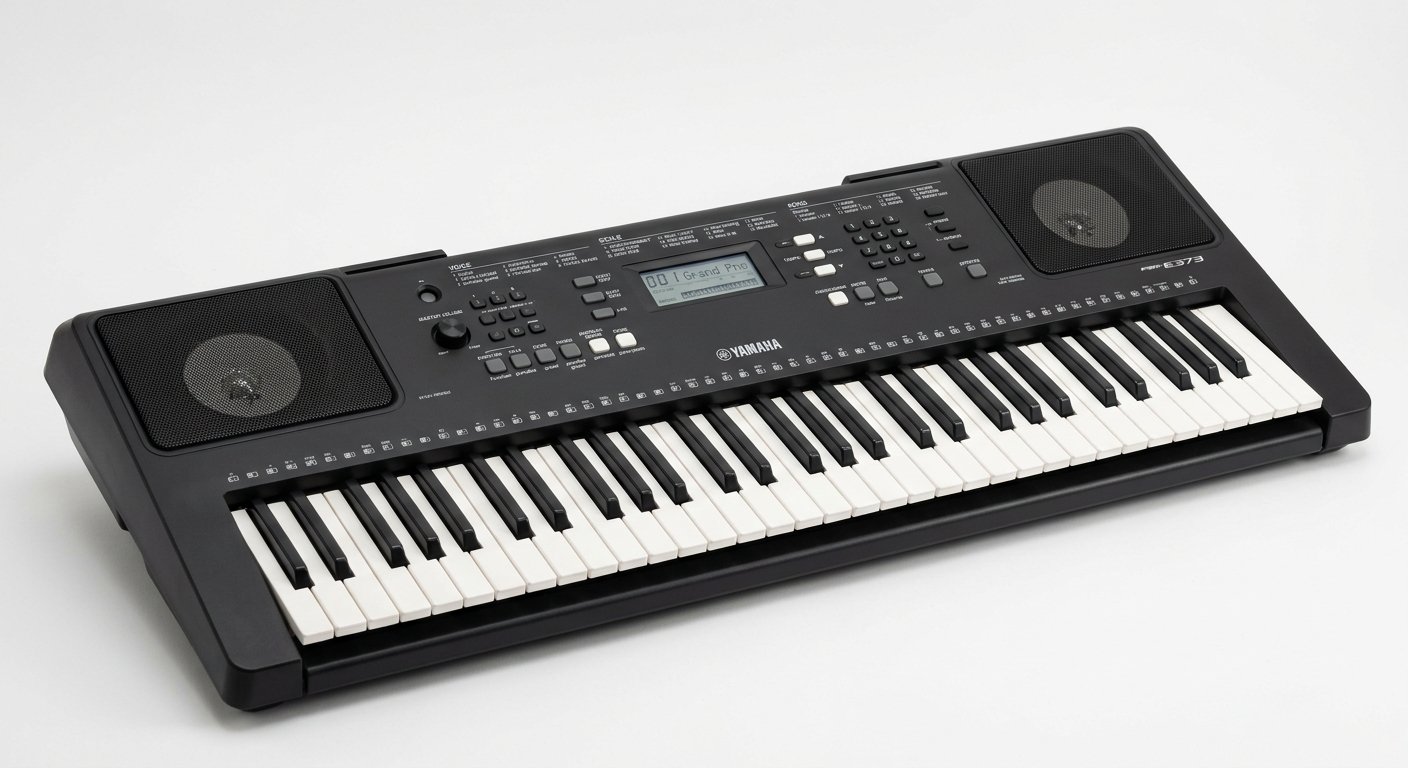
The PSR-E383 (~$249) is the 61-key keyboard most reviewers land on in 2026, and for good reason: it is the one that gives beginners the most room to grow.
The keys are touch-sensitive, which matters more than it sounds. Play harder and the note gets louder, exactly like an acoustic piano. That single feature is what lets you develop dynamics and real technique instead of hammering everything at one volume, and it is what separates the E383 from cheaper boards like the RockJam.
Yamaha layers proper learning tools on top. Touch Tutor specifically teaches loud and soft playing. Smart Chord lets a total beginner play full chords with one finger, so you sound good in week one while you learn correct fingerings underneath. There are 622 voices, and USB-MIDI means it plugs straight into Flowkey, Simply Piano, or a DAW (specs on Yamaha’s official PSR-E383 page).
At under 10 lbs it moves between rooms easily and runs on batteries.
Who should buy it: most beginners, kids, and adult learners who want a keyboard they will not outgrow in six months.
Watch out for: the keys are touch-sensitive, not weighted, this is not a substitute for a digital piano.
Yamaha PSR-E383
Touch-sensitive keys, 622 voices, Touch Tutor and Smart Chord: the 61-key keyboard that gives beginners the most room to grow.
Check Price on Amazon2. Casio CT-S1: Best Sound and Design
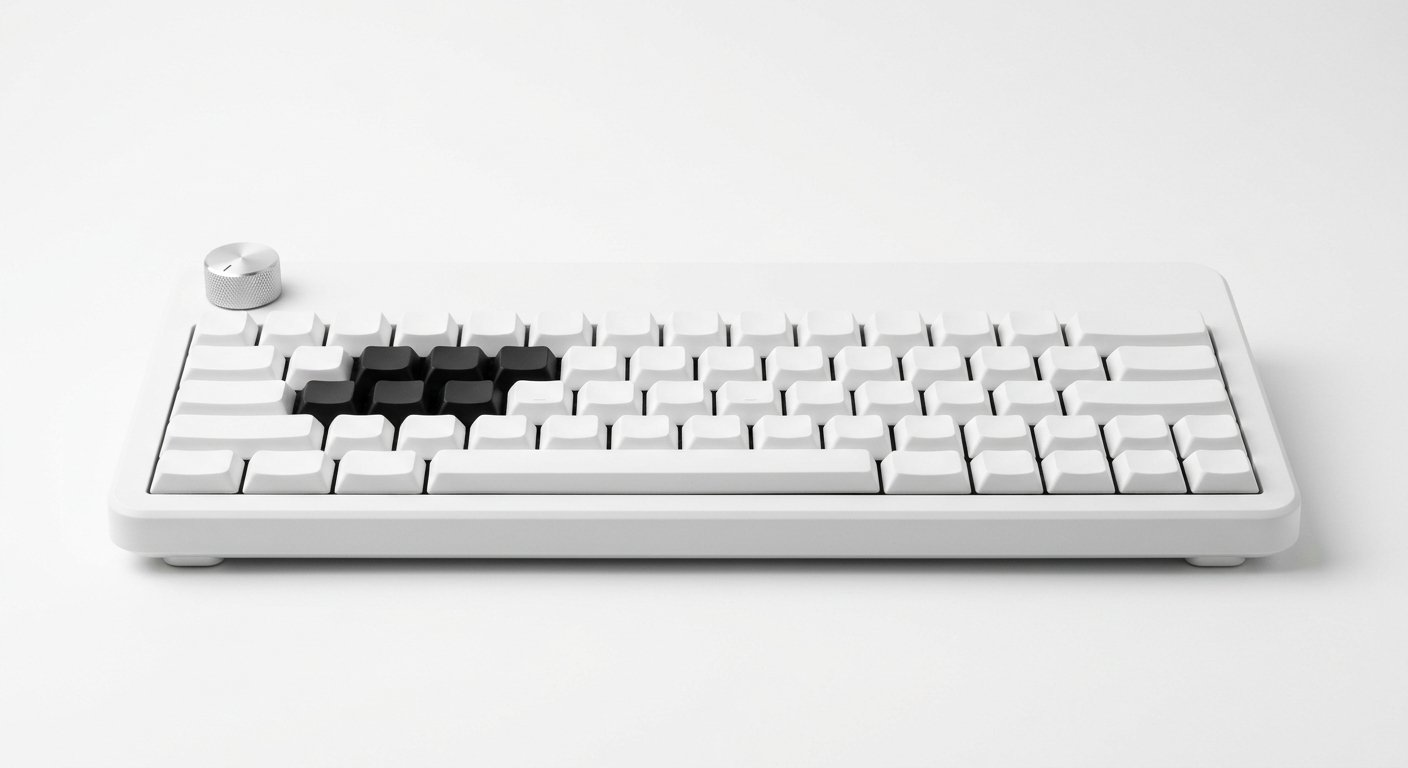
The CT-S1 (~$219) is the keyboard for people who do not want their instrument to look like a toy. Casio stripped the control panel down to almost nothing, one volume knob, no giant LCD, no wall of buttons, and the result genuinely looks like a piece of modern furniture in a living room. It comes in black, white, or red.
The sound punches well above the price. Casio’s AiX Sound Engine drives a stereo grand piano voice with real depth and character, the kind that keeps you engaged through a long practice session rather than fatiguing you. In our testing it was the best-sounding board here through headphones. Several reviewers rate it the best-sounding keyboard in this bracket, full stop.
The 61 keys are touch-sensitive with a matte textured finish that feels surprisingly premium. At under 10 lbs with battery operation, it travels anywhere.
Who should buy it: adult learners who care about tone and aesthetics and want a minimal instrument that lives in the open.
Watch out for: the minimal panel means fewer onboard features and no arranger styles.
Casio CT-S1
The AiX Sound Engine delivers a stereo grand piano tone that rivals keyboards twice the price, in a minimal body that looks like decor.
Check Price on Amazon3. Casio CT-S300: Best Budget Touch-Sensitive
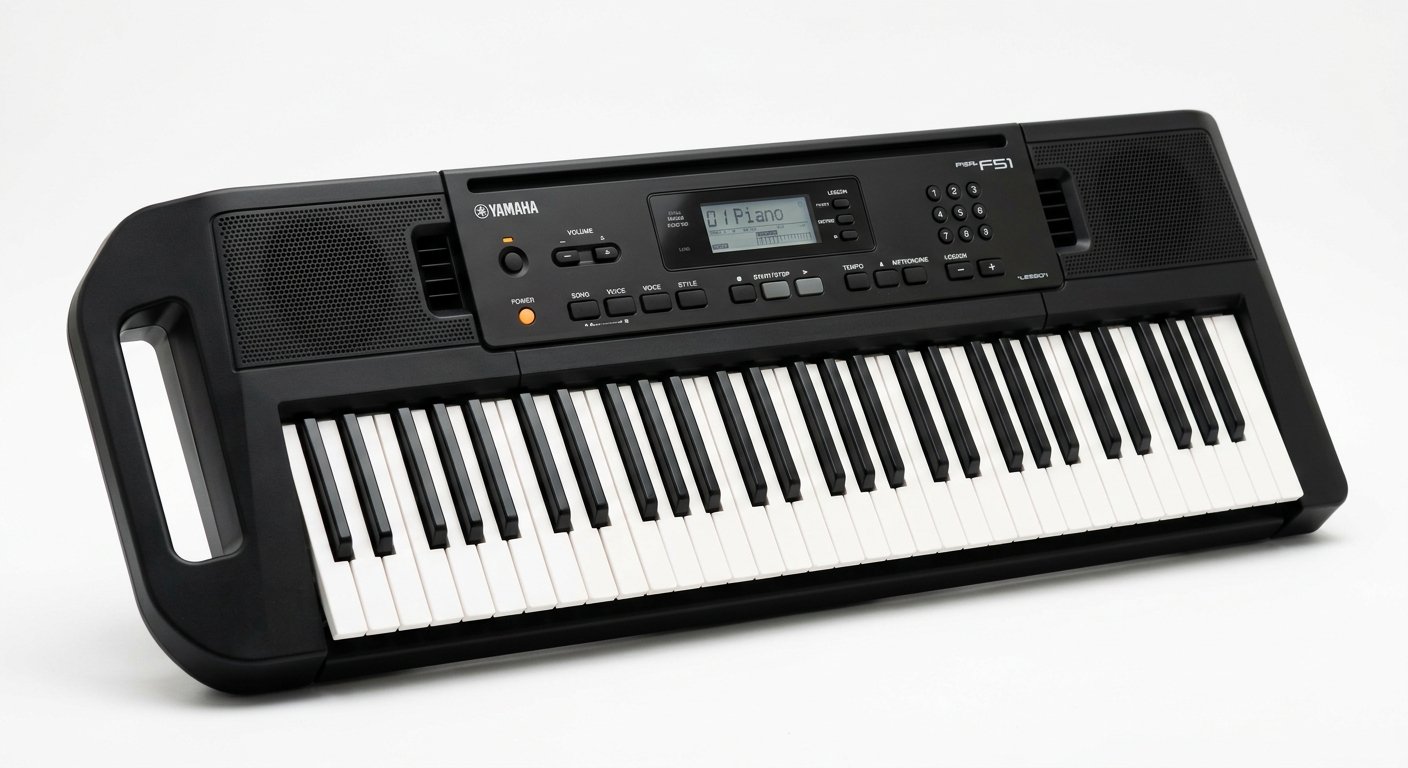
The CT-S300 (~$179) is the cheapest keyboard here that still gives you touch-responsive keys, and that makes it the smartest budget buy for anyone who actually wants to learn.
You get over 400 sounds, 77 rhythms, a built-in carrying handle, battery operation, and Casio’s Dance Music Mode, which lets you build EDM tracks by layering parts, a feature that keeps kids and teens practising when classical exercises would not. It weighs just 3.3 kg.
It also works with Casio’s Chordana teaching app, and a 60-song songbook is included.
Who should buy it: budget buyers, kids, and anyone who needs a genuinely portable keyboard with real touch response.
Watch out for: the sound engine is a step below the CT-S1.
Casio CT-S300
The cheapest keyboard with real touch-responsive keys, plus a carrying handle, battery power, and Dance Music Mode.
Check Price on Amazon4. Yamaha NP-15 Piaggero: Best Piano Feel
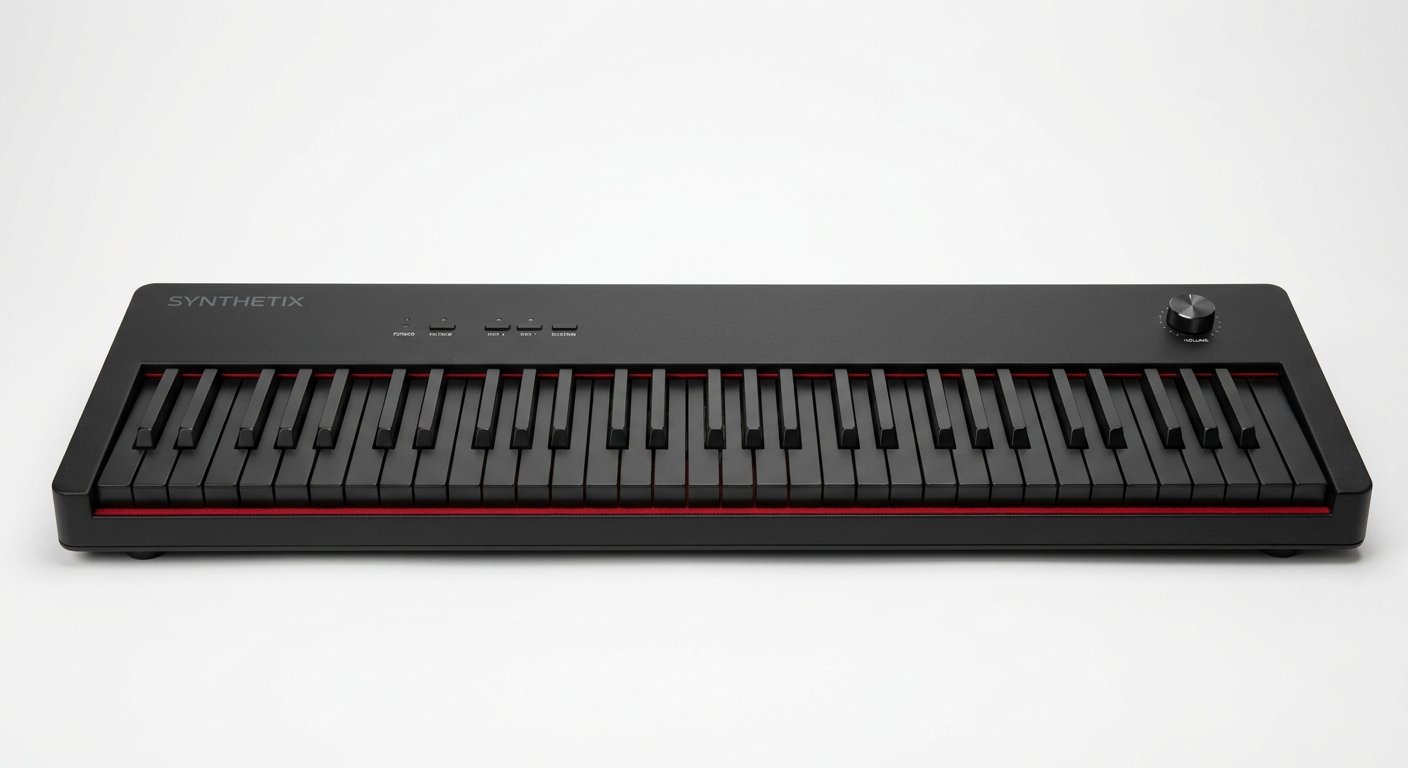
The NP-15 (~$249) is the pick if you want a piano, not a feature-loaded keyboard. Yamaha’s Piaggero line is deliberately no-frills: minimal design, one knob, a matte black finish, and a thin red felt strip along the base of the keys that makes it look and feel like a proper instrument rather than a gadget.
The tone comes from samples of a Yamaha concert grand, and it sounds noticeably more serious and refined than the arranger-style boards in this list. The keys are velocity-sensitive with a graded feel that is closer to piano touch than anything else at this price without going fully weighted.
If you eventually want 76 keys, the NP-35 is the same instrument with more range.
Who should buy it: adult beginners who want piano tone and feel, not 600 voices and backing styles.
Watch out for: almost no features, this is a piano, and nothing else.
Yamaha NP-15 Piaggero
Concert-grand samples and a graded velocity-sensitive keybed in a beautiful minimal body: the most piano-like 61-key board.
Check Price on Amazon5. Alesis Melody 61 MK4: Best Complete Bundle
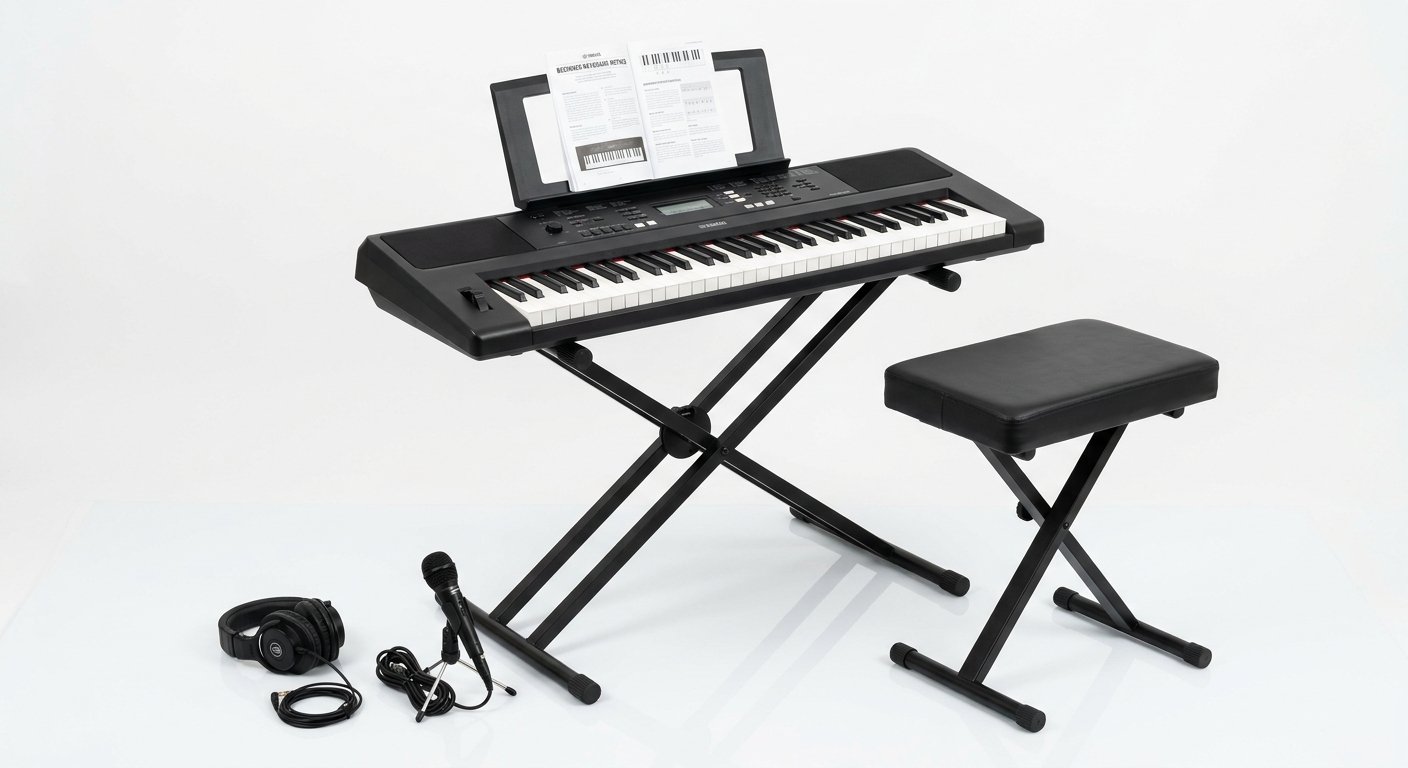
The Melody 61 MK4 (~$139) exists to remove every excuse. It ships as a complete kit: keyboard, stand, bench, headphones, microphone, and music rest. You unbox it, set it up in ten minutes, and start playing, no second shopping trip.
You get 300 sounds, 300 rhythms, split and layer modes, a metronome, a record mode, and lesson integration with Skoove and Melodics. At 6.6 lbs it is the lightest board here. USB-MIDI works instantly with GarageBand or any DAW.
The honest caveat: touch response is minimal. This will not build the finger strength or dynamic control that a touch-sensitive board like the PSR-E383 will. It is a fantastic first instrument for a child or a curious adult, and a poor one for someone serious about piano technique.
Who should buy it: parents buying a first keyboard for a child, or anyone who wants everything in one box for under $150.
Watch out for: minimal touch response, so it is not a technique-building instrument.
Alesis Melody 61 MK4
Keyboard, stand, bench, headphones, and mic in one box, plus Skoove and Melodics lessons, for under $150.
Check Price on Amazon6. Yamaha PSR-E473: Most Advanced
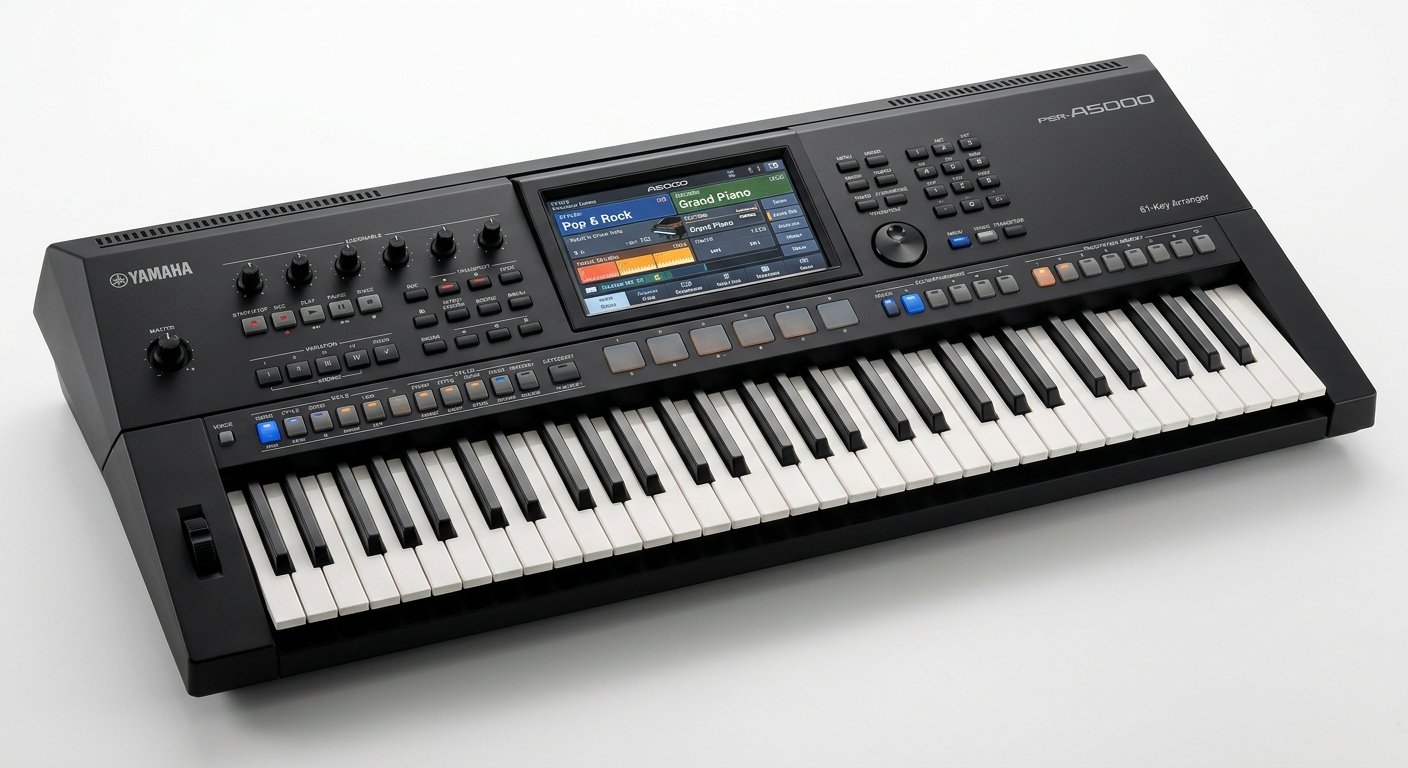
The PSR-E473 (~$399) is where a 61-key keyboard stops being a learning tool and starts being an instrument you perform and produce with.
You get Live Control knobs for real-time filter and effect tweaking, a deep DSP effects engine, a huge voice library, quick sampling, and a Motion Effect system that lets you manipulate sound performatively. It is essentially a portable arranger workstation.
For a beginner this is overkill and the extra $150 is better spent elsewhere. For a songwriter, worship musician, or gigging keyboardist who wants one board that does everything on a small stand, it is the pick.
Who should buy it: intermediate players, songwriters, and performers who want hands-on control and pro features.
Watch out for: significantly more expensive and more complex than a beginner needs.
Yamaha PSR-E473
Live Control knobs, a deep DSP engine, quick sampling, and a huge voice library: a portable arranger workstation.
Check Price on Amazon7. RockJam 61 Superkit: Cheapest Starter Kit
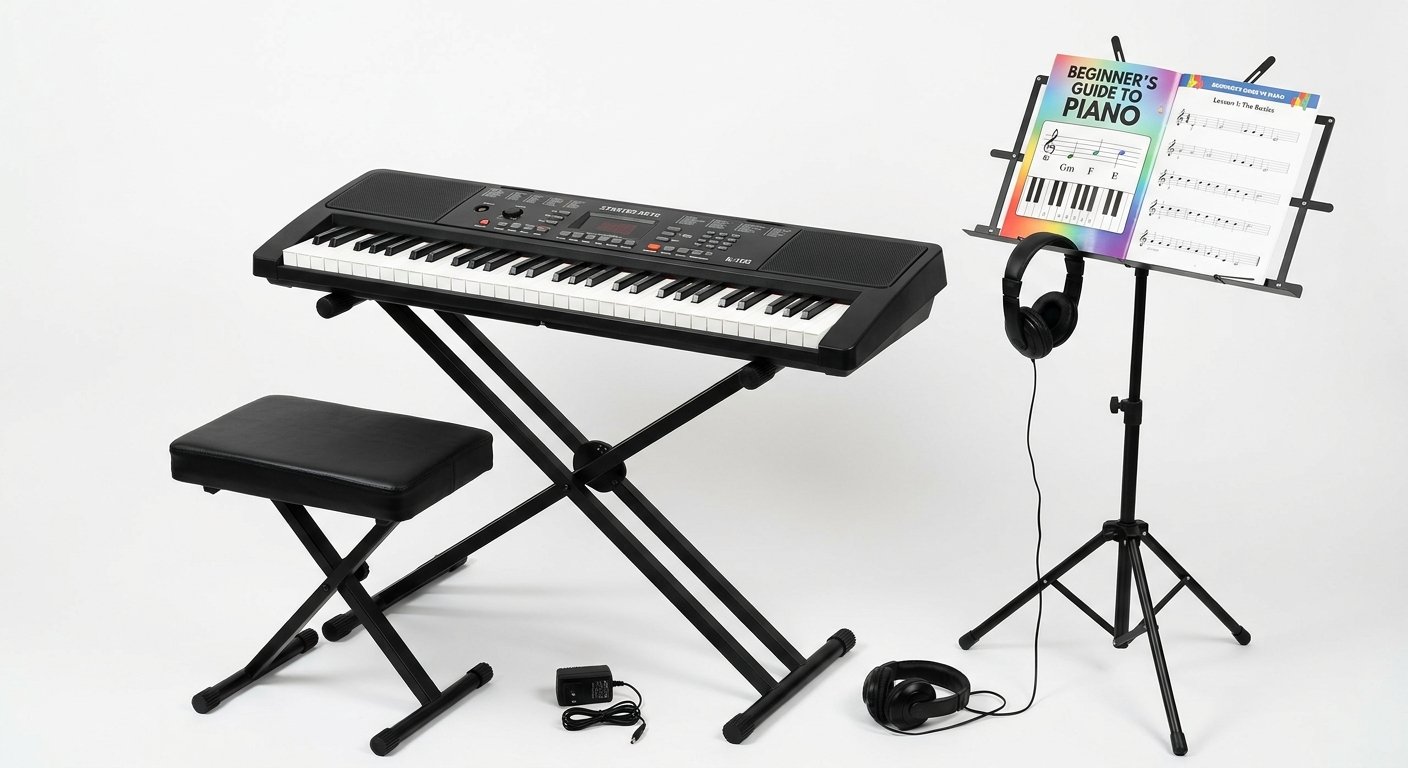
The RockJam 61 Superkit (~$119) is the cheapest way to put a 61-key keyboard, stand, bench, headphones, and a learning app into someone’s hands. If the goal is to find out whether a child will stick with piano before spending real money, this does that job.
Set expectations accordingly. The keys are unweighted with no touch response, so every note plays at the same volume no matter how you strike it. The build is light plastic. You cannot practise dynamics on it, and a motivated learner will outgrow it inside a year.
As a low-risk test purchase, it is fine. As a real learning instrument, spend the extra $60 on the Casio CT-S300 instead.
Who should buy it: parents testing whether a child is genuinely interested, and casual players who just want to noodle.
Watch out for: no touch sensitivity at all, this actively limits technique development.
RockJam 61 Key Superkit
The cheapest full starter kit: keyboard, stand, bench, headphones, and a learning app for around $119.
Check Price on AmazonIs 61 Keys Enough to Learn Piano?
Mostly, yes, with one important caveat.
Sixty-one keys gives you five octaves, which covers roughly 95% of beginner and intermediate repertoire. Every scale, every chord shape, hand coordination, sight reading, music theory, all of it can be learned on 61 keys. Most pop, rock, jazz, and contemporary music lives comfortably inside that range.
Where you hit the wall is classical repertoire. Serious classical pieces use the extremes of the keyboard, and you will run out of notes. If your goal is classical study or exam grades, buy 88 keys from the start.
The bigger issue is not key count but key feel. Most 61-key boards have unweighted or touch-sensitive keys, not fully weighted hammer action. Weighted keys build the finger strength and dynamic control that transfer to an acoustic piano. If piano technique is your goal, a weighted 88-key instrument, see our guide to the best digital piano under $1000, is the better purchase.
Buy 61 keys if: you play pop or contemporary music, produce, have limited space or budget, or want a portable second board.
Buy 88 weighted keys if: you want to learn piano properly, study classically, or ever plan to play an acoustic piano.
How to Choose a 61 Key Keyboard Piano
Touch sensitivity is the one spec that matters
If you buy nothing else from this guide, buy touch sensitivity. A touch-responsive keyboard plays louder when you strike harder. Without it you cannot practise dynamics at all, and you build a habit of hitting every key with the same force, a habit that is genuinely hard to unlearn later. The PSR-E383, CT-S1, and CT-S300 all have it. The RockJam does not.
Full-size keys, always
Make sure the keys are full-size (the same width as an acoustic piano). Mini-key boards feel cramped and teach the wrong hand spacing. Every keyboard in this guide has full-size keys.
USB-MIDI for learning apps
USB-MIDI turns your keyboard into a controller for Flowkey, Simply Piano, Skoove, and any DAW. The app sees exactly which keys you press and gives instant feedback, which makes learning dramatically faster than working from a book alone. All seven boards here have it.
Sound quality over sound quantity
Six hundred voices sounds impressive on the box, and you will use about five of them. A great grand piano voice (Casio CT-S1, Yamaha NP-15) is worth more than 500 mediocre ones. Listen to demos on headphones before you buy.
Speakers and portability
All of these have built-in speakers, which is the point of a 61-key board, no amp needed. Most run on batteries, so they work anywhere. Weight ranges from 6.6 lbs (Alesis) to around 12 lbs, all easily carried by one person.
Frequently Asked Questions
What is the best 61 key keyboard piano in 2026?
Is a 61 key keyboard enough to learn piano?
61 keys or 88 keys for a beginner?
Do I need touch-sensitive keys on a 61 key keyboard?
What is the best 61 key keyboard for beginners on a budget?
Can a 61 key keyboard be used as a MIDI controller?
The Bottom Line
For most people in 2026, the Yamaha PSR-E383 is the best 61 key keyboard piano: touch-sensitive keys, a real learning system, and enough depth that you will not outgrow it in a year. If tone and design matter most, the Casio CT-S1 sounds better than anything else at this price. On a budget, the Casio CT-S300 is the cheapest board with real touch response, and the Alesis Melody 61 MK4 is the best all-in-one starter kit.
Prioritize touch sensitivity above every other spec. And be honest with yourself about your goal, if you want to learn piano rather than keyboard, an 88-key weighted instrument is the better buy.
For more, see our guides to the best digital piano under $1000, the best digital pianos with weighted keys, and the best 61-key MIDI controller if production is your focus.