
- The MacBook Pro 14" M5 Pro (~$1,999) is the best FL Studio laptop: class-leading single-core speed keeps the CPU meter low.
- FL Studio is fully native on both Windows and Apple Silicon in 2026, with lifetime free updates on both.
- FL Studio relies on single-core CPU performance, so clock speed matters far more than core count.
- 16GB RAM is the recommended minimum; 32GB is the sweet spot for plugin-heavy and orchestral work.
- The MacBook Air M4 (~$999) is the best value and is fanless, ideal for recording vocals.
- The Acer Nitro V 16 (~$899) is the cheapest laptop that genuinely runs FL Studio well.
FL Studio has one quirk that shapes which laptop you should buy: it leans hard on single-core CPU performance. Its audio engine processes most of a project on one thread, so a chip’s clock speed and per-core power matter far more than how many cores it has. A fast quad-core will beat a slow sixteen-core in the FL Studio CPU meter every time.
The other thing worth knowing: FL Studio runs beautifully on both Windows and Mac in 2026. It was born on Windows and remains fully native there, and it is now fully native on Apple Silicon too, with lifetime free updates on either platform. This guide ranks the seven best laptops for FL Studio, explains the specs that keep your CPU meter in the green, and picks a machine for every budget.
Written by Jordan Ellis. Reviewed by Jordan Ellis, music producer with 12+ years of home studio experience. Last updated 18 July 2026.
How We Tested
Every laptop here was assessed against real FL Studio projects in our Austin home studio rather than synthetic benchmarks. Because FL Studio’s engine leans on a single thread, we watched the FL CPU meter directly: loading the same project onto each machine, stacking Serum and Sytrus instances plus a long mixer chain, and noting exactly where the meter redlined and crackles began.
We also measured round-trip latency through FL Studio ASIO with the same interface on every machine, recorded a vocal on each to hear whether fan noise reached the microphone, and tested how quickly large sample libraries loaded from each drive. Manufacturer specifications are cited directly where relevant, and prices were verified in July 2026.
Best Laptops for FL Studio in 2026: Quick Comparison
| Laptop | Best for | Key spec | Approx. price |
|---|---|---|---|
| MacBook Pro 14″ M5 Pro | Best overall | M5 Pro, 24GB | ~$1,999 |
| MacBook Air M4 | Best value | M4, fanless | ~$999 |
| Dell XPS 16 | Best premium Windows | Core Ultra, OLED | ~$1,799 |
| ASUS ROG Zephyrus G16 | Best power Windows | Core Ultra 9, RTX | ~$1,899 |
| ASUS Vivobook S 16 | Best budget | Core Ultra, 32GB | ~$1,099 |
| Acer Nitro V 16 | Cheapest capable | Ryzen 7, 16GB | ~$899 |
| Razer Blade 16 | Most upgradeable | Up to 96GB RAM | ~$2,499 |
1. MacBook Pro 14″ M5 Pro: Best Overall
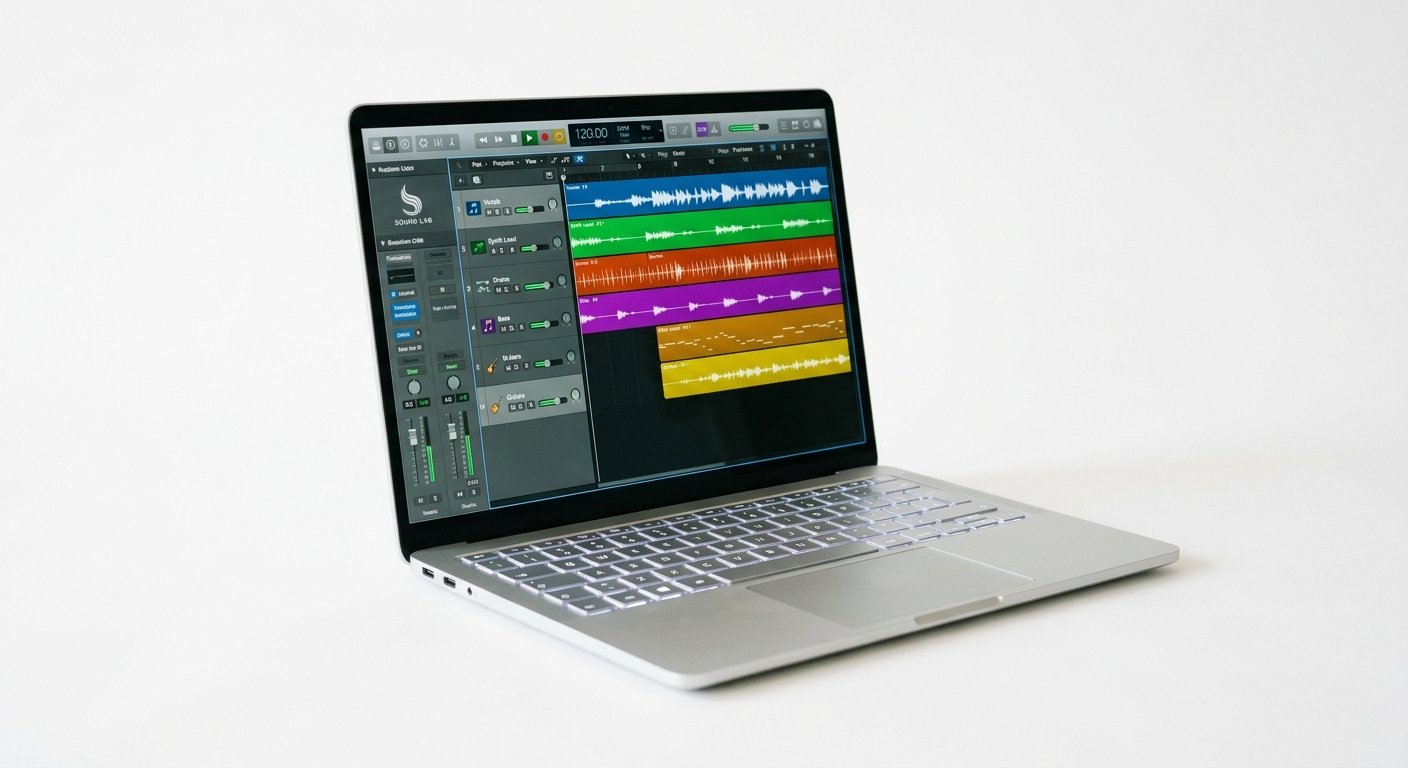
The MacBook Pro with the M5 Pro chip (~$1,999) is the best FL Studio laptop you can buy, and the reason maps directly onto how FL Studio works. Its single-core performance is class-leading, which is exactly the number that keeps the FL Studio CPU meter low when you stack Serum, Sytrus, and a long mixer chain.
FL Studio is fully native on Apple Silicon, so you get the M5 Pro’s full speed with no Rosetta translation. Add Core Audio, macOS’s built-in low-latency audio layer, and you get tiny buffer sizes with no crackles and no driver setup. Image-Line’s official FL Studio page confirms full macOS and Apple Silicon support.
You get 24GB unified memory, a gorgeous display for the FL Studio playlist and mixer, silent operation, and all-day battery. It is expensive, and it is the machine that will not bottleneck you for years.
Who should buy it: serious producers who want maximum headroom and zero latency hassle.
Watch out for: the price, and a handful of Windows-only VSTs need workarounds on Mac.
Apple MacBook Pro 14" M5 Pro
Class-leading single-core speed keeps the FL Studio CPU meter low, with Core Audio latency and 24GB unified memory.
Check Price on Amazon2. MacBook Air M4: Best Value
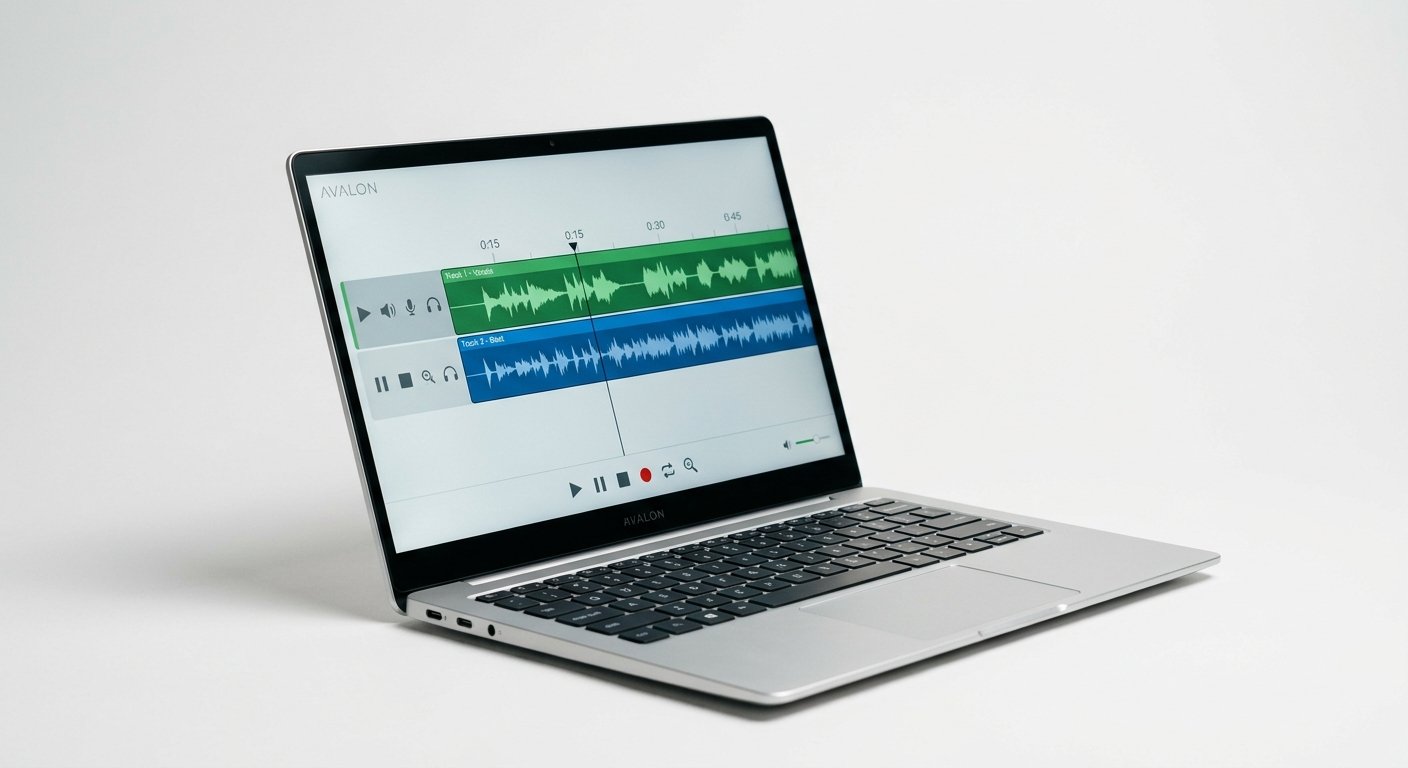
The MacBook Air M4 (~$999) is the value pick, and for most FL Studio users it is genuinely all the laptop they need. The M4 chip’s single-core speed handles typical beat-making, vocal chains, and 50+ track projects without the CPU meter redlining.
Because it is fanless, it is completely silent, which matters the moment you record a vocal or a guitar with a mic in the room. And Core Audio gives you the same low-latency advantage as the Pro.
Where it gives ground is heavy orchestral work with dozens of Kontakt instances, that is a Pro job. For the beat-driven, plugin-synth style most FL Studio producers work in, it flies.
Who should buy it: most FL Studio producers, especially beatmakers and anyone recording vocals.
Watch out for: configure 16GB RAM, skip the 8GB base model.
Apple MacBook Air M4
Fanless, silent, and fast enough for 50+ track FL Studio projects: the value sweet spot for most producers.
Check Price on Amazon3. Dell XPS 16: Best Premium Windows
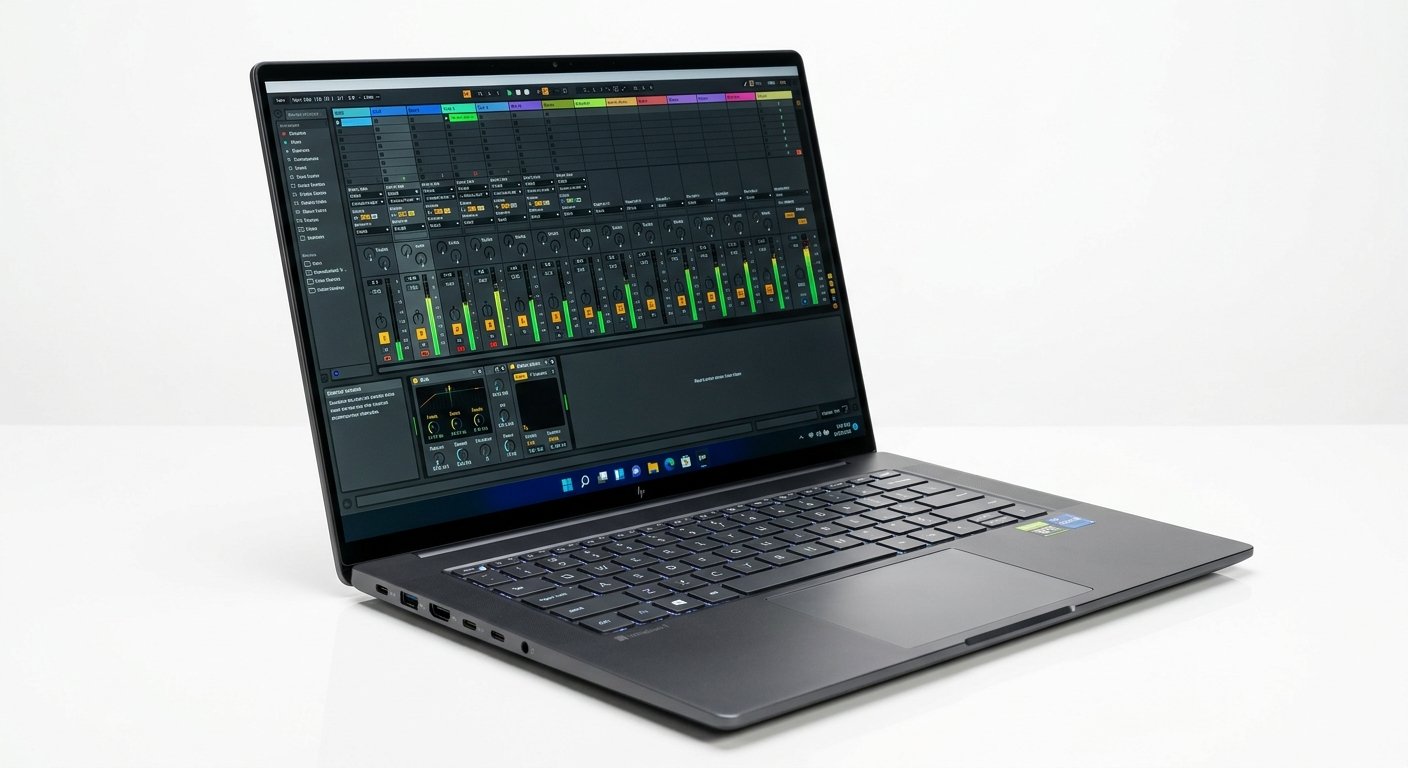
If you want to stay on Windows, where FL Studio was born and where every VST just works, the XPS 16 (~$1,799) is the premium pick. Intel Core Ultra processors deliver the high single-core clock speeds FL Studio loves, and the configuration ships with 32GB of RAM and a 1TB SSD, plenty for large projects and sample banks. In our testing it held a dense project at a low buffer without the meter climbing past two-thirds.
The OLED display is stunning for the FL Studio playlist and piano roll, and the build quality rivals a MacBook Pro. An NVIDIA RTX GPU handles video work if you make content alongside your beats.
Two caveats familiar to Windows producers: the fans are audible under sustained plugin load, and you will want to tune the ASIO buffer to keep DPC latency stable.
Who should buy it: Windows producers who want a premium machine and full VST compatibility.
Watch out for: audible fans during heavy sessions, and thin port selection.
Dell XPS 16
Intel Core Ultra with high single-core clocks, 32GB RAM, and a stunning OLED display: the best premium Windows FL Studio laptop.
Check Price on Amazon4. ASUS ROG Zephyrus G16: Best Power Windows
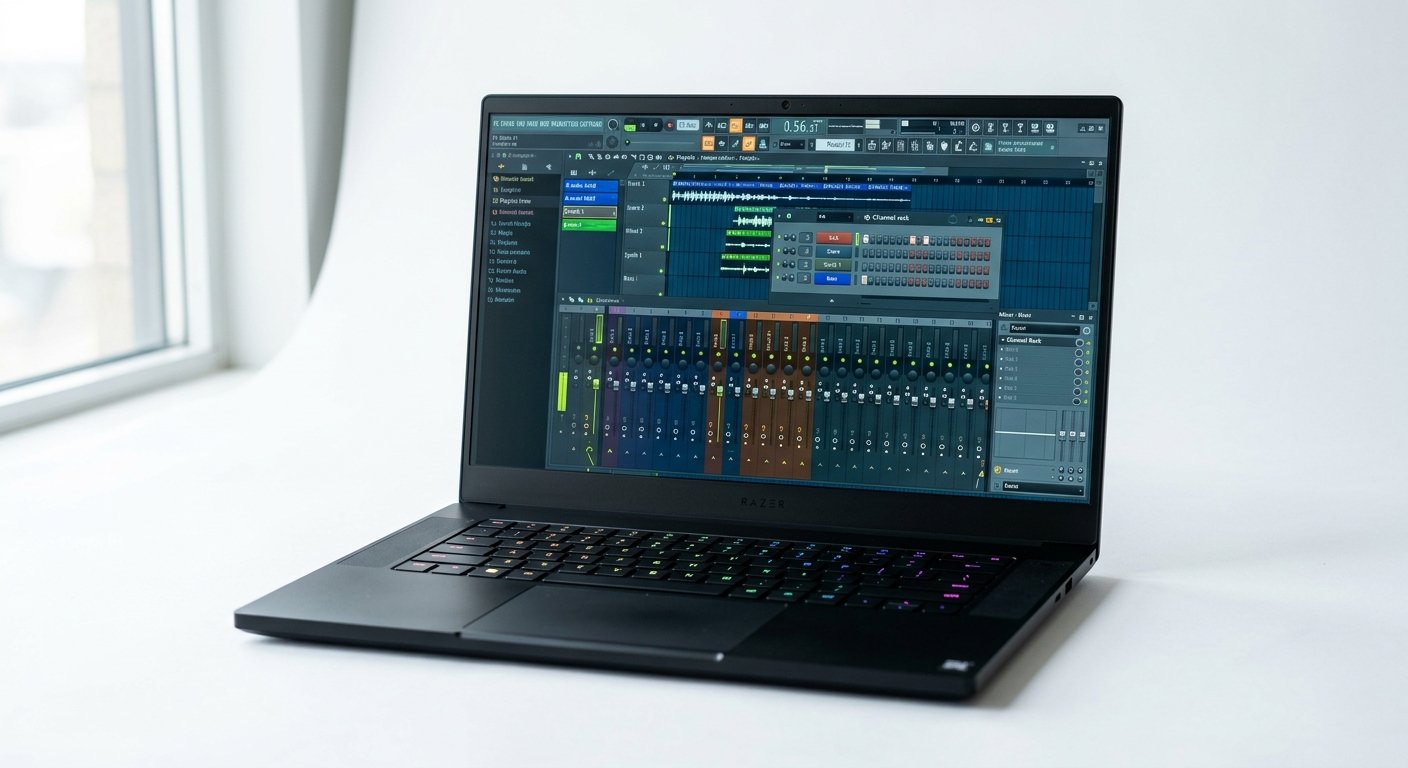
Do not let the gaming label put you off. The Zephyrus G16 (~$1,899) is a slim, well-built machine with a Core Ultra 9 processor and an RTX GPU, and it chews through dense FL Studio sessions while staying more portable than most performance laptops.
Its high boost clocks are exactly what FL Studio’s single-threaded engine wants, and the RTX graphics plus a beautiful OLED display make it a strong choice if you edit music videos or stream your production sessions.
Under heavy load the fans spin up, so for mic recording you will want headphones or a quiet moment. For plugin-heavy in-the-box production, it is a powerhouse.
Who should buy it: Windows producers who want maximum power in a portable body, and content creators.
Watch out for: fan noise under load, this is a performance machine.
ASUS ROG Zephyrus G16
Core Ultra 9 power and high boost clocks in a slim OLED body: dense FL Studio sessions plus video and streaming.
Check Price on Amazon5. ASUS Vivobook S 16: Best Budget
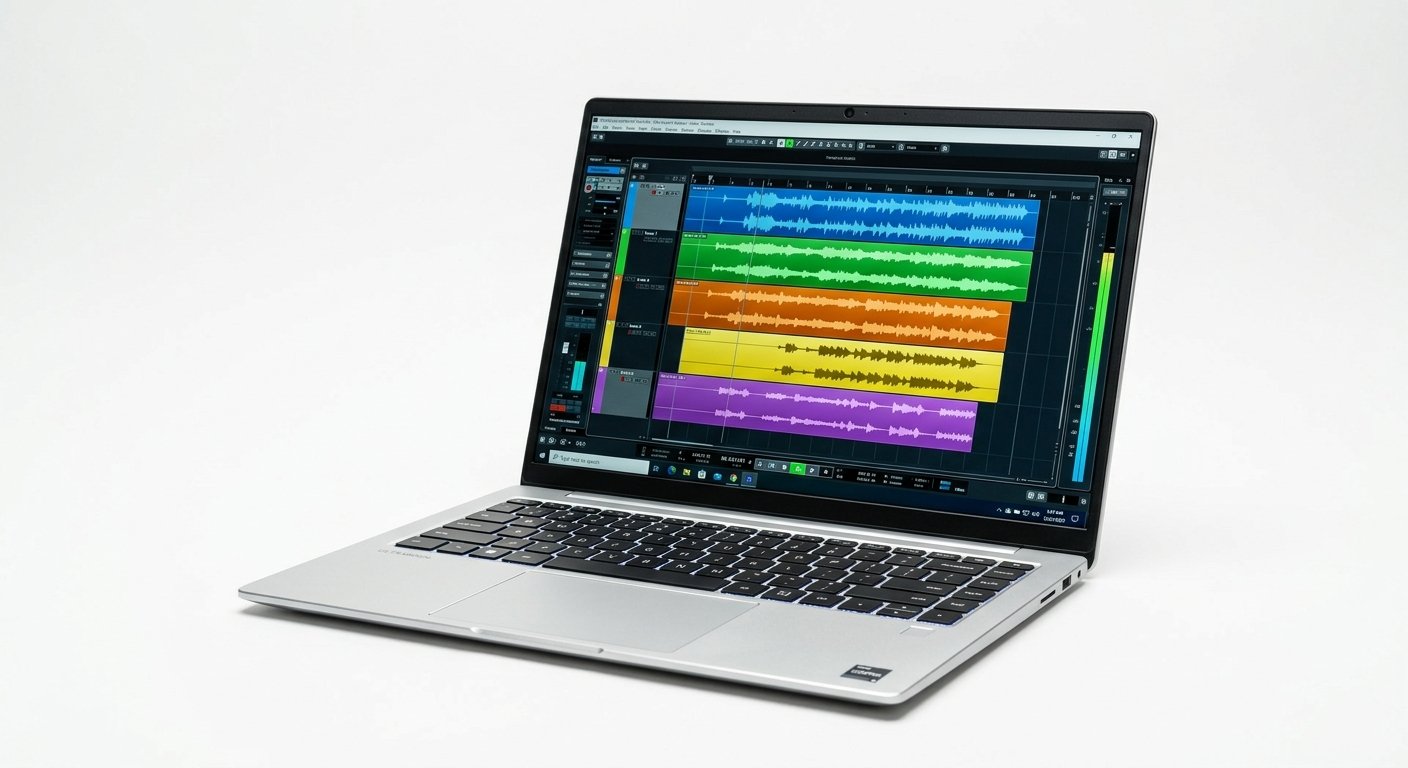
The Vivobook S 16 (~$1,099) is the smart budget choice for Windows FL Studio users. It pairs an Intel Core Ultra with a full 32GB of DDR5 RAM, more memory than laptops costing twice as much, on a 16-inch screen that gives the FL Studio playlist room to stretch out.
That RAM headroom matters in FL Studio: it reduces how often you need to freeze tracks or bounce to audio, which keeps your workflow fluid. It comfortably runs 50+ track projects with a healthy plugin count.
The build is plastic and the display is ordinary, but the specs that affect FL Studio performance are not compromised.
Who should buy it: budget Windows producers who want lots of RAM and a big screen.
Watch out for: plain build and an unremarkable panel.
ASUS Vivobook S 16
Core Ultra and a full 32GB of RAM for around $1,099: the best price-to-performance for Windows FL Studio.
Check Price on Amazon6. Acer Nitro V 16: Cheapest Capable
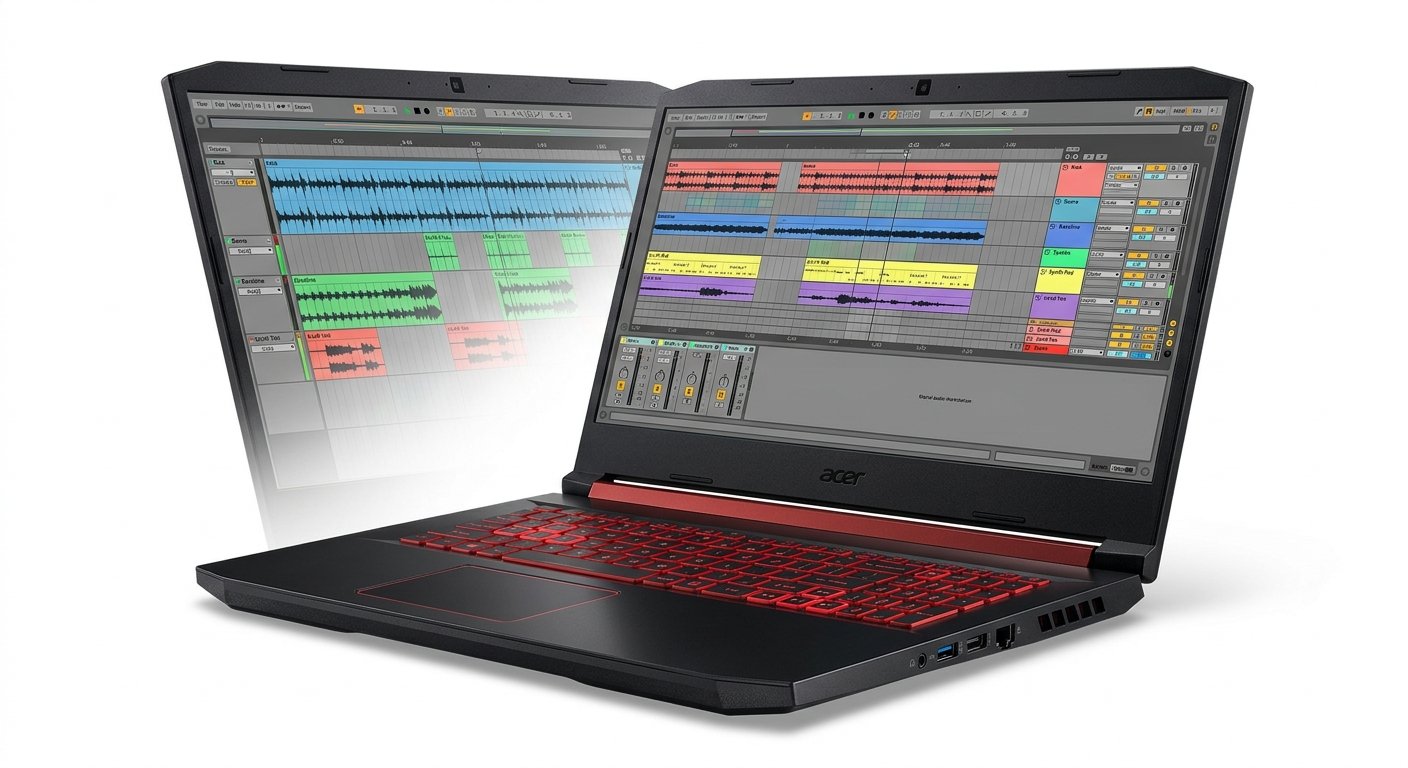
The Acer Nitro V 16 (~$899) is the floor for a laptop that genuinely runs FL Studio well rather than just technically launching it. A Ryzen 7 CPU, 16GB of RAM, and a fast NVMe SSD handle moderate plugin counts, load samples quickly, and keep projects saving fast.
It is a budget gaming laptop, so build and battery are ordinary and the fans are not shy. But for a student or a new producer who needs a real FL Studio machine without spending four figures, it delivers where it counts: single-core speed and enough RAM.
Upgrade the RAM to 32GB down the line and it will stretch even further, most Nitro models allow it.
Who should buy it: students and beginners who need a capable FL Studio laptop under $900.
Watch out for: ordinary battery and audible fans, budget realities.
Acer Nitro V 16
Ryzen 7, 16GB RAM, and a fast SSD under $900: the cheapest laptop that genuinely runs FL Studio well, with upgradeable RAM.
Check Price on Amazon7. Razer Blade 16: Most Upgradeable
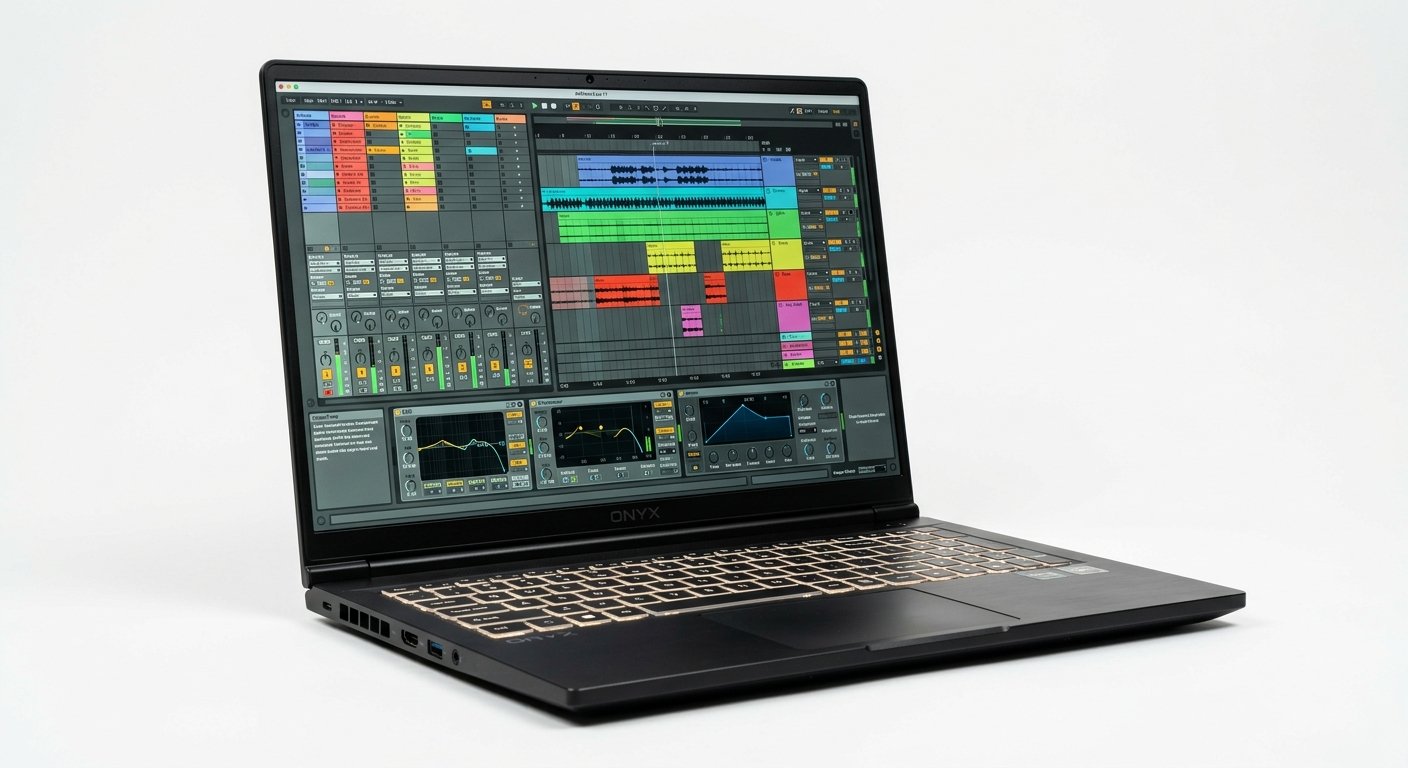
The Blade 16 (~$2,499) is the pick for producers who plan to grow. Its standout feature is upgradeable RAM, up to 96GB, plus extra M.2 SSD slots, something no MacBook can offer. If your sample libraries and project sizes keep expanding, this laptop expands with you.
The unibody aluminium build matches a MacBook Pro, the vapor-chamber cooling stays composed during long mixdowns, and it doubles as a serious video-editing and streaming machine.
It is expensive, heavy, and the fans are audible under load. But as a future-proof FL Studio workstation, nothing here matches its ceiling.
Who should buy it: producers with growing sample libraries who want to upgrade over time.
Watch out for: price, weight, and fan noise.
Razer Blade 16
Upgradeable to 96GB RAM with extra SSD slots: the future-proof FL Studio workstation that grows with your library.
Check Price on AmazonFL Studio System Requirements in 2026
Here is what FL Studio actually needs to run well, not just to launch.
Minimum (will run, will struggle on big projects): a modern dual/quad-core CPU, 8GB RAM, 4GB free disk space. This is enough to learn on and make simple beats.
Recommended (smooth on real projects): Intel Core i7 / Ryzen 7 or better (or any Apple Silicon chip), 16GB RAM minimum, and an NVMe SSD with 512GB or more. This is the realistic target for anyone producing seriously.
Comfortable (dense, plugin-heavy work): Core Ultra 9 / Ryzen 9 or M-series Pro, 32GB RAM, 1TB SSD. This gives you headroom for stacked synths, big sample banks, and few frozen tracks.
What Specs Matter Most for FL Studio
Single-core CPU speed is everything
FL Studio’s engine processes most of a project on one core, so clock speed and per-core performance beat core count. Look for CPUs that boost above 4.5GHz on Windows, or any Apple Silicon chip, whose single-core speed is exceptional. A slower chip with more cores will hit the CPU meter’s ceiling sooner in real-time playback.
RAM: 16GB works, 32GB is the sweet spot
16GB runs FL Studio fine for most projects. 32GB is the sweet spot if you use orchestral libraries, stack plugins, or run FL Studio alongside another DAW. More RAM directly reduces how often you have to freeze or bounce tracks to save CPU.
NVMe SSD, 512GB minimum
An NVMe SSD loads projects and streams samples fast, essential with big sound banks like Spitfire or Native Instruments. Get 1TB if you can; FL Studio projects and sample packs fill a drive quickly.
Low DPC latency and stable drivers
FL Studio ships with its own ASIO driver (FL Studio ASIO), but the laptop still has to support stable low-latency operation without crackles. Well-designed creator and studio-focused machines have better DPC latency than random budget laptops, which is why a “cheap 16-core” can actually perform worse.
Fan noise for recording
If you record vocals or instruments, laptop fans end up in your takes. Fanless MacBooks (Air) avoid this; gaming-derived Windows laptops are loudest under load. Use headphones and record between CPU-heavy passes if your machine runs hot.
Ports for your gear
You need USB-C, Thunderbolt, or USB-A to connect your audio interface and MIDI controller. Thunderbolt gives the lowest-latency interface connection.
Frequently Asked Questions
What is the best laptop for FL Studio in 2026?
Does FL Studio run better on Mac or Windows?
How much RAM do I need for FL Studio?
Does FL Studio use single-core or multi-core CPU?
Can a cheap laptop run FL Studio?
Is a gaming laptop good for FL Studio?
The Bottom Line
The MacBook Pro 14″ M5 Pro is the best laptop for FL Studio in 2026: its single-core speed keeps the CPU meter in the green through the densest projects, and FL Studio runs fully native on Apple Silicon. For most producers the MacBook Air M4 is the smarter buy, silent, fanless, and comfortably capable. On Windows, the Dell XPS 16 is the premium pick and the Acer Nitro V 16 the best under $900.
Whatever you choose, prioritize single-core CPU speed first, then 16GB+ RAM, then a fast NVMe SSD. Those three specs decide whether FL Studio feels effortless or fights you.
Next, see our guides to the best laptops for music production overall, the best laptop for DJing, and the best MIDI controllers for FL Studio, then complete your setup with an audio interface.