
- The Roland FP-30X (~$699) has the best weighted action: PHA-4 Standard with escapement simulation and ivory-feel keytops.
- The Kawai ES120 (~$949) has the finest tone, driven by a sampled Shigeru Kawai SK-EX concert grand.
- The Korg B2 (~$449) is the cheapest legitimately weighted digital piano you can buy in 2026.
- Fully weighted hammer action uses a physical hammer mechanism; semi-weighted keys are just springs and are not a substitute.
- Graded means bass keys are heavier and treble keys lighter, exactly as on an acoustic piano.
- 128-note polyphony is the practical minimum, or notes will cut off during heavy sustain-pedal use.
Weighted keys are the single most important thing to get right when buying a digital piano. Not polyphony, not the number of voices, not Bluetooth. If the keybed feels springy and light, you will build habits that actively hold you back, and you will feel it the first time you sit at an acoustic piano.
The problem is that “88 keys” on a box does not mean weighted keys. Plenty of cheap keyboards advertise a full-size keybed that still feels like a toy under your hands. This guide covers seven digital pianos that genuinely deliver on weighted action, explains the difference between hammer action, graded hammer, and semi-weighted, and tells you exactly what to look for.
Written by Jordan Ellis. Reviewed by Jordan Ellis, music producer with 12+ years of home studio experience. Last updated 18 July 2026.
How We Tested
Every piano here was played in our Austin home studio rather than judged from a spec sheet, and because this guide is entirely about key action, that is where we concentrated. We played the same passages on each instrument, slow legato lines to feel the escapement, fast repeated notes to test reset speed, and heavy sustained chords, then compared each directly against the acoustic upright in the room rather than against each other in isolation.
We also checked polyphony behaviour by pedalling heavily through dense passages to hear whether notes cut off, and listened to each piano through both onboard speakers and headphones. Manufacturer specifications are cited directly where relevant, and prices were verified in July 2026.
Best Digital Pianos with Weighted Keys in 2026: Quick Comparison
| Digital piano | Best for | Key action | Approx. price |
|---|---|---|---|
| Roland FP-30X | Best overall action | PHA-4 Standard | ~$699 |
| Kawai ES120 | Best tone | Responsive Hammer Compact | ~$949 |
| Yamaha P-225 | Best value | Graded Hammer Compact | ~$649 |
| Roland FP-10 | Best entry weighted | PHA-4 Standard | ~$599 |
| Korg B2 | Cheapest true weighted | Natural Weighted Hammer | ~$449 |
| Casio PX-S1100 | Best slim design | Smart Scaled Hammer | ~$729 |
| Yamaha YDP-145 Arius | Best console piano | Graded Hammer Standard | ~$1199 |
Weighted Key Types Explained
Before the picks, understand what you are actually buying. The terminology is where most people get misled.
Fully weighted / hammer action
The keybed contains a small physical hammer mechanism that mimics the mass and resistance of an acoustic piano’s action. When you press the key, you are moving a weighted lever, not compressing a spring. This is what you want. It builds finger strength, teaches dynamic control, and transfers directly to an acoustic piano.
Graded hammer action
The same thing, but graded: bass keys are heavier and treble keys are progressively lighter, exactly as on an acoustic piano, where thick bass strings need heavier hammers. Every piano in this guide is graded. It is the gold standard, and it is what makes the low end feel authoritative under your left hand.
Semi-weighted
A spring-loaded key with a bit of added resistance. No hammer mechanism. It feels heavier than a synth keybed but nothing like a piano. Semi-weighted is not a substitute for hammer action if learning piano is your goal, and manufacturers use the term loosely.
Unweighted / synth action
Light, springy, fast. Great for organ, synth leads, and MIDI production. Useless for building piano technique. This is what most 61-key keyboards use.
The short version: look for the words hammer action or graded hammer. If a spec sheet says only “88 keys” or “touch sensitive,” it is almost certainly not weighted.
1. Roland FP-30X: Best Overall Action
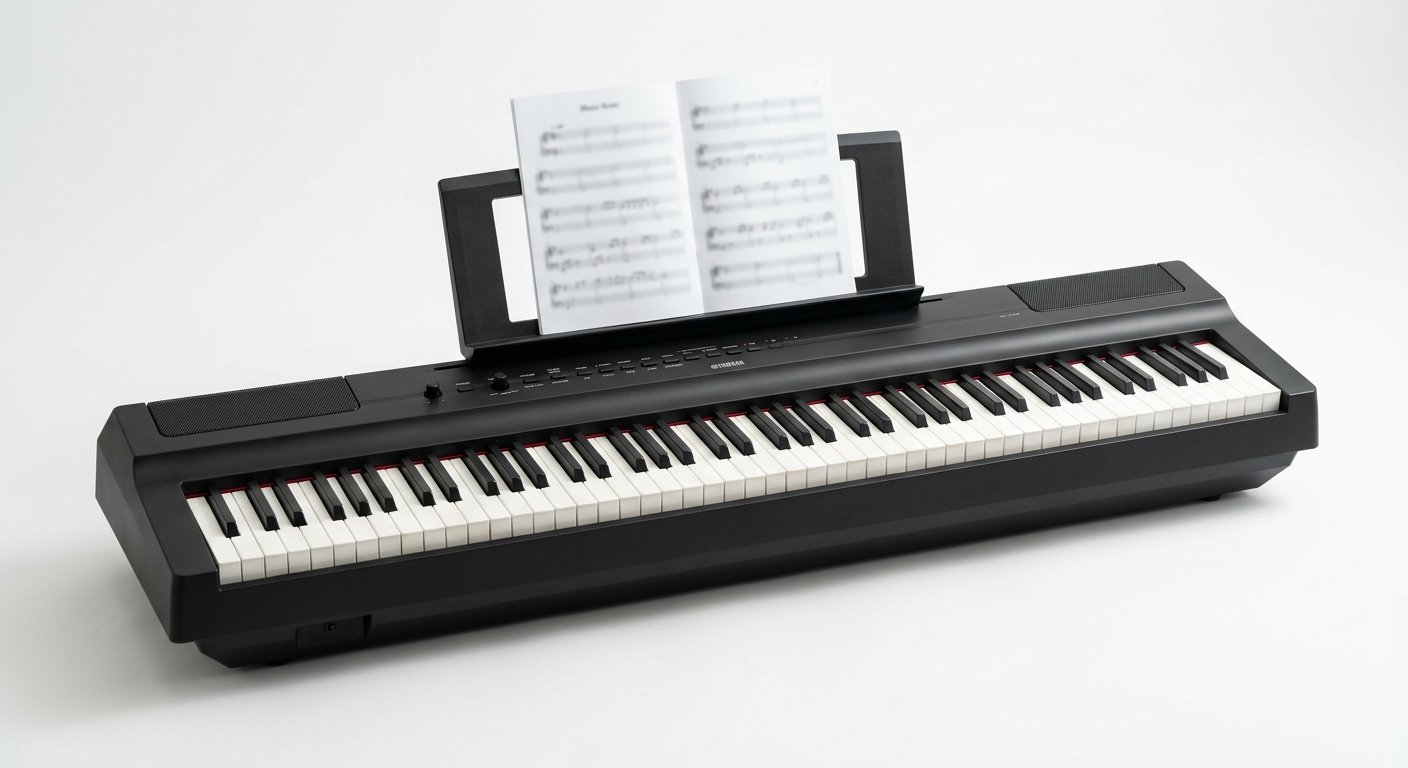
The FP-30X (~$699) is the piano most reviewers reach for when someone asks for the best weighted action at a real-world price. Roland’s PHA-4 Standard keybed has genuine escapement simulation (that subtle notch you feel pressing a key slowly on a grand), textured synthetic ivory keytops, and a substantial, deliberate feel that rewards proper technique.
The SuperNATURAL sound engine does not just play back samples, it models the instrument, which means effectively unlimited polyphony on piano tones and no note-stealing during heavy pedalling. Bluetooth audio and MIDI are built in. The onboard speakers are genuinely good for a portable (see specs on Roland’s official FP-30X page).
The action is on the heavier side. Some players love it; others find it slightly stiff compared to Yamaha or Casio. If you can, play one first.
Who should buy it: serious learners and intermediate players who want the most convincing weighted feel without spending four figures.
Watch out for: the PHA-4 action is heavier than average, a matter of taste.
Roland FP-30X
PHA-4 Standard hammer action with escapement and ivory-feel keytops, plus Roland’s SuperNATURAL modelled piano engine.
Check Price on Amazon2. Kawai ES120: Best Tone
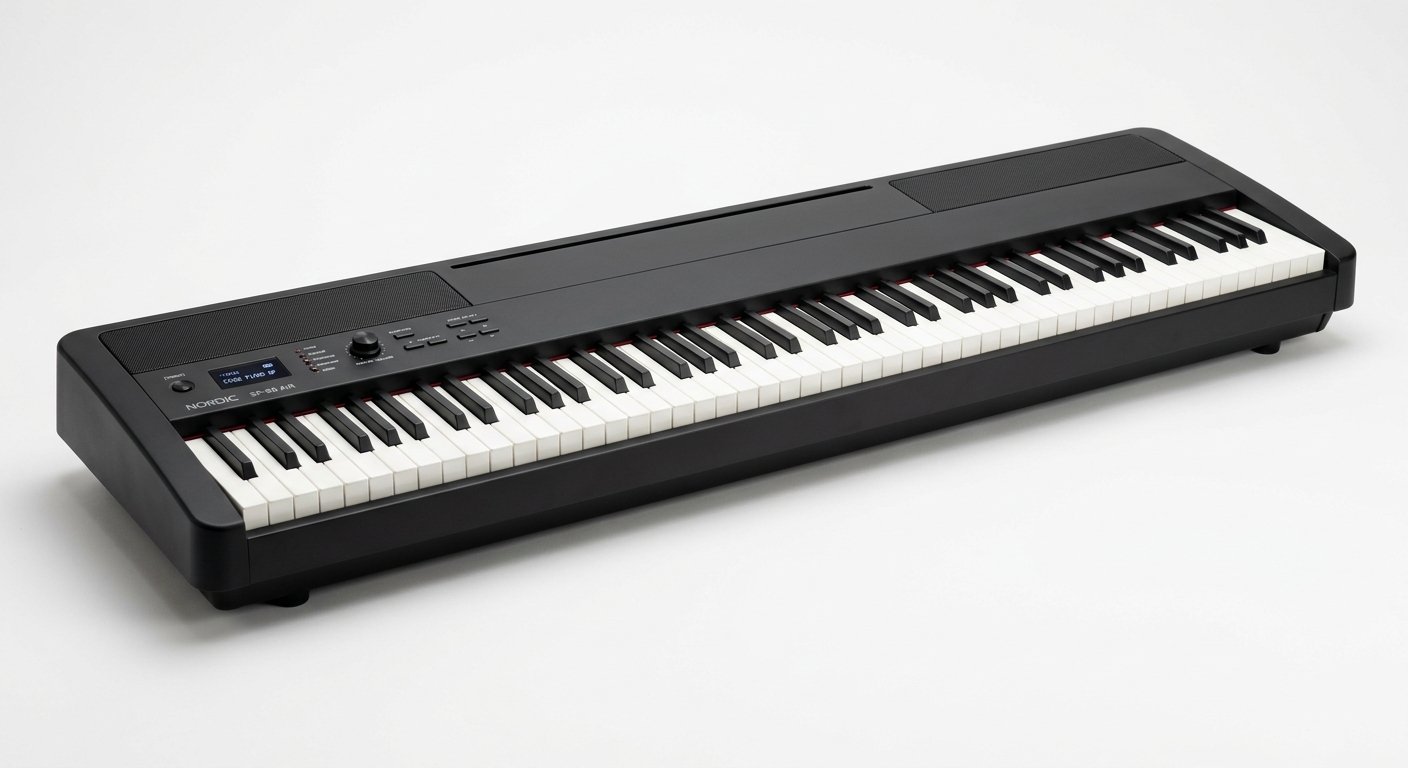
Kawai builds acoustic grand pianos, and the ES120 (~$949) is where that heritage shows. Its Responsive Hammer Compact action is smoother, quieter, and more organic than anything else here, and reviewers consistently rate it the most acoustic-like feel in the portable class.
The tone is the headline. Kawai’s Harmonic Imaging engine drives a sampled Shigeru Kawai SK-EX concert grand, a handmade instrument that sits alongside Steinways in recital halls. In our testing it held together under sustained classical playing where cheaper samples turned brittle. It is warm, resonant, and holds together under sustained classical playing where cheaper samples turn brittle.
The RHC action is lighter than Roland’s PHA-4. Some players prefer that, some find it lacks heft. It is the most “musical” instrument in this guide.
Who should buy it: players who prioritize tone and touch over features, especially classical students.
Watch out for: a sparse feature set and a lighter action than Roland.
Kawai ES120
Responsive Hammer Compact action and a sampled Shigeru Kawai SK-EX concert grand: the most musical portable piano here.
Check Price on Amazon3. Yamaha P-225: Best Value
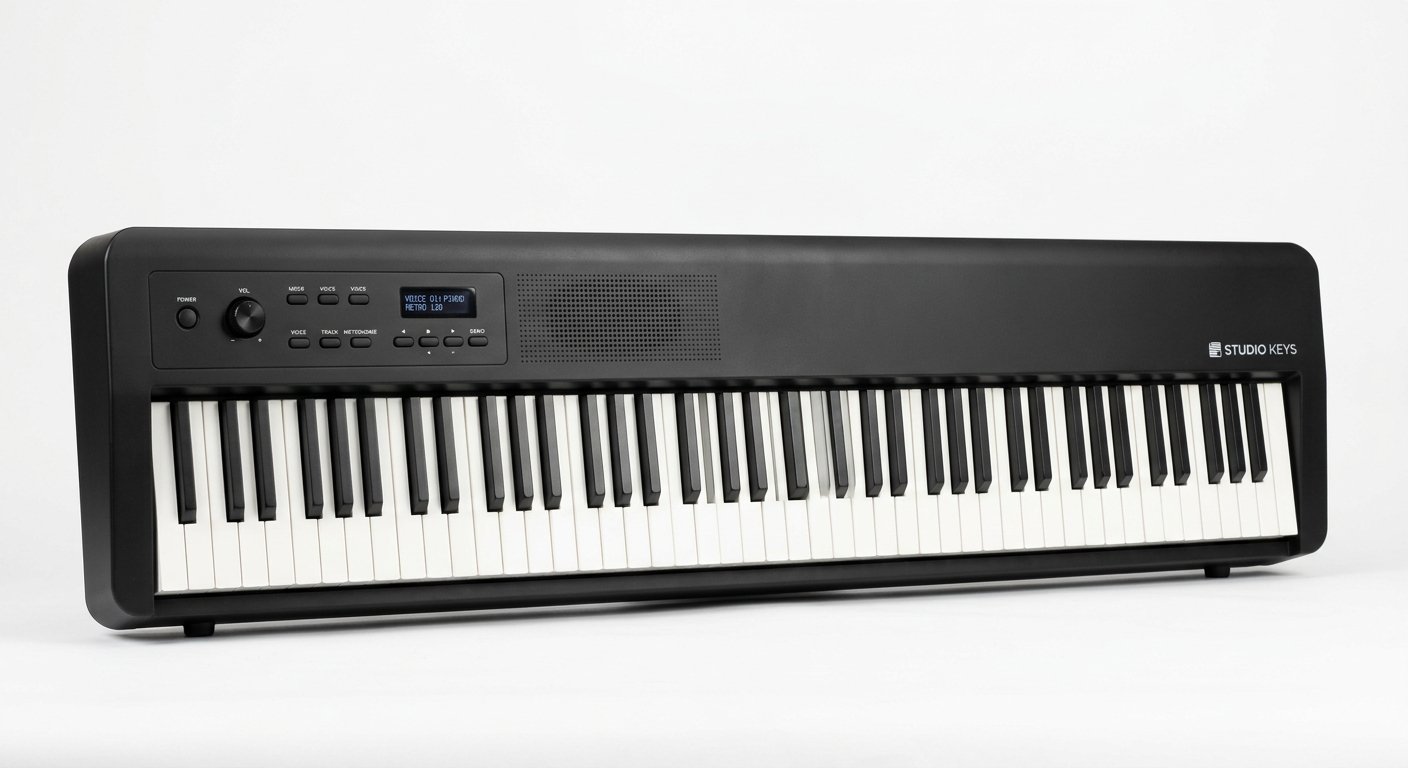
The P-225 (~$649) is the safe, sensible, very good answer. Yamaha’s newer Graded Hammer Compact (GHC) action is a real step up from the old GHS keybed: lighter, more even across the range, and better suited to fast passages while still being properly weighted and graded.
It carries Yamaha’s flagship CFX concert grand sample, the same instrument used at the Chopin International Piano Competition, and the speakers project well for a portable. The chassis is slim and lighter than most 88-key slabs.
It does not feel as convincing as the Kawai or as substantial as the Roland. It also does not cost as much, and it will not let a beginner down.
Who should buy it: most beginners and intermediate players who want proven weighted keys and a great tone at a mid price.
Watch out for: the GHC action is lighter than a real acoustic.
Yamaha P-225
The improved GHC graded hammer action and Yamaha’s flagship CFX concert grand sample in a slim, well-priced body.
Check Price on Amazon4. Roland FP-10: Best Entry Weighted
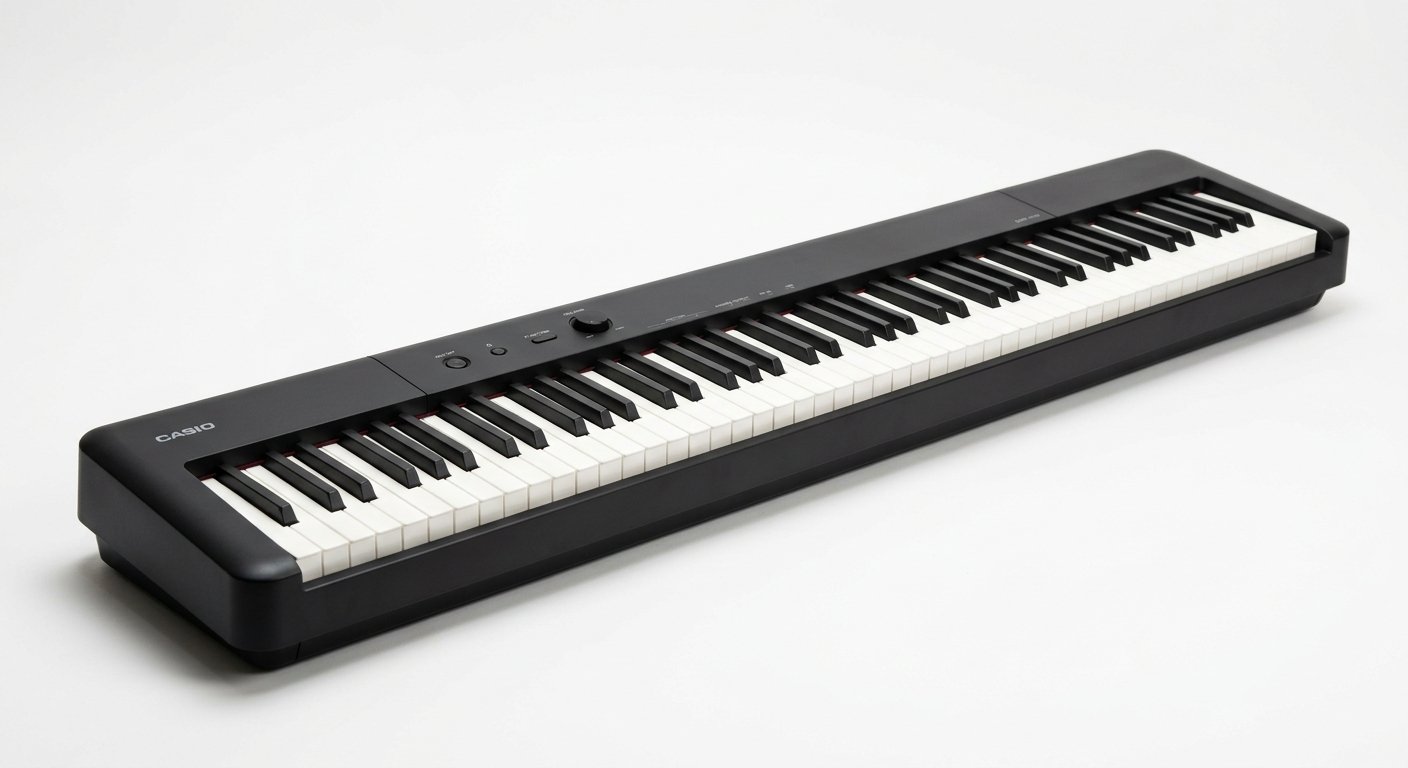
The FP-10 (~$599) is a quietly remarkable instrument: it has the exact same PHA-4 Standard keybed as the FP-30X, at a substantially lower price. Most budget pianos cut corners on the action first. Roland did the opposite, it cut speakers and features and kept the keys.
That makes it the single best entry point into genuinely realistic weighted action. The SuperNATURAL piano tone is excellent through headphones. The onboard speakers are small and the feature set is bare, only 15 sounds, no Bluetooth audio.
As a pure practice instrument, it punches far above its price.
Who should buy it: beginners on a budget who refuse to compromise on key feel.
Watch out for: weak speakers, use headphones or an amp.
Roland FP-10
The same PHA-4 Standard hammer action as the FP-30X at the lowest price Roland offers it: best key feel per dollar.
Check Price on Amazon5. Korg B2: Cheapest True Weighted Piano
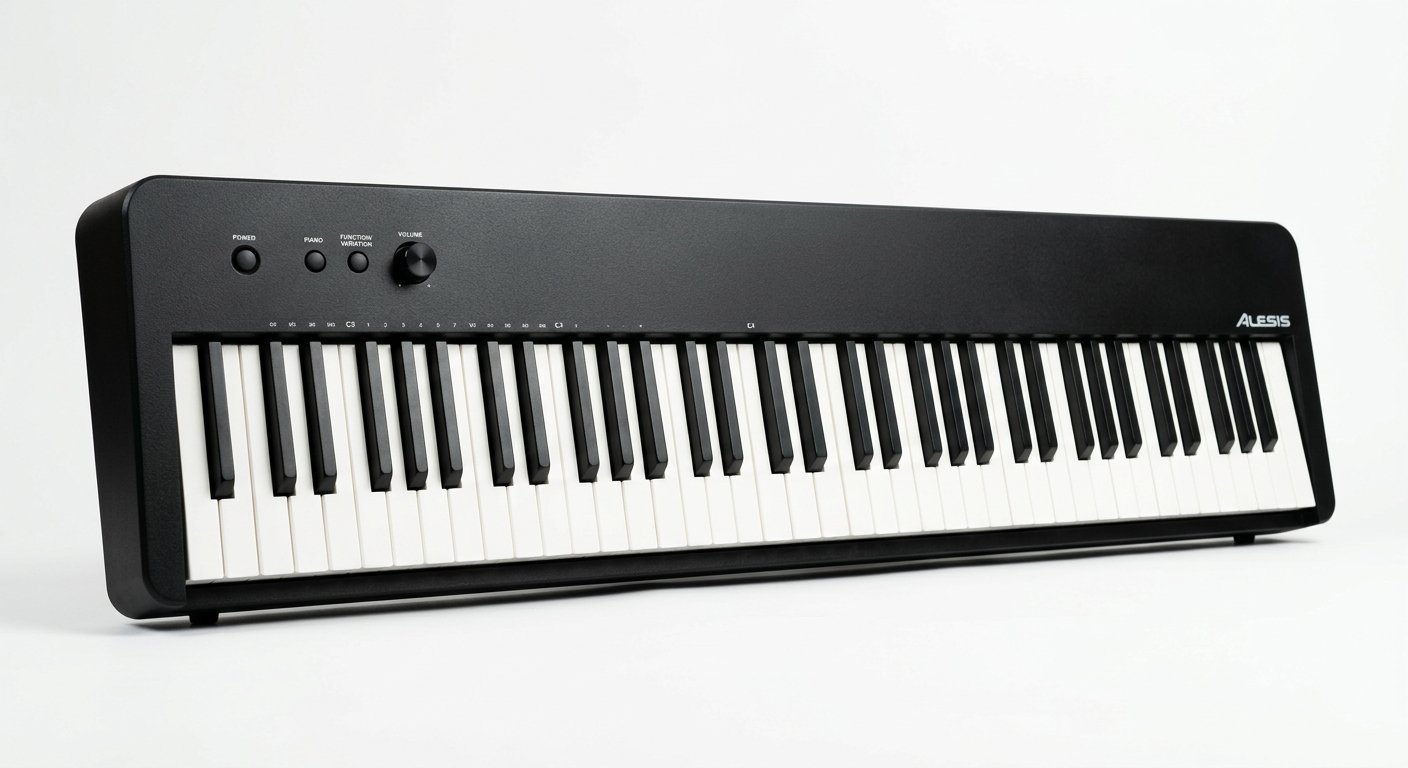
The Korg B2 (~$449) is the lowest-cost legitimate weighted digital piano on the market in 2026. Its Natural Weighted Hammer Action delivers the essential graded feel, heavier bass, lighter treble, without the mechanical refinements of a PHA-4 or a Kawai RHC.
Korg made pragmatic choices. 120-note polyphony handles basic repertoire without note-stealing. The sound engine uses stereo PCM samples of a German concert grand, serviceable rather than beautiful. The interface is a power button, a volume knob, and a handful of sound buttons. No screen, no menus, no learning curve.
This is the floor of the category. Below it, you are buying a keyboard, not a piano.
Who should buy it: absolute beginners on the tightest budget who still want real hammer action.
Watch out for: a basic action and a plain sound engine, you get exactly what you pay for.
Korg B2
The lowest-cost legitimately weighted digital piano: Natural Weighted Hammer Action with no frills and no menus.
Check Price on Amazon6. Casio PX-S1100: Best Slim Design
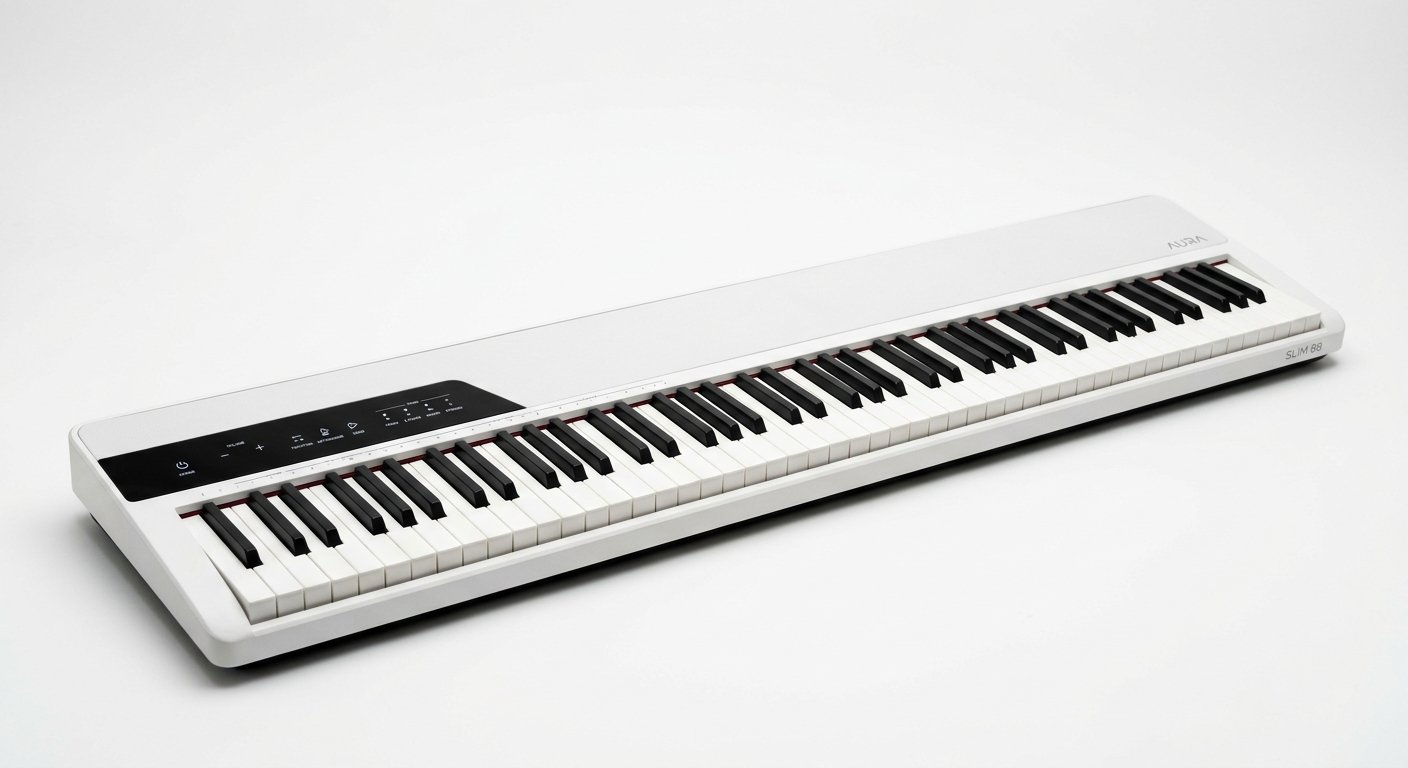
The PX-S1100 (~$729) packages a proper weighted keybed into the slimmest 88-key body on the market, roughly four inches deep. In a small apartment or a shared room, that is not a gimmick, it is the difference between owning a piano and not.
Casio’s Smart Scaled Hammer Action is graded across all 88 keys with textured ebony and ivory keytops. Reviewers who compared it directly to a Yamaha P-45 found it slightly lighter but not meaningfully worse for technique development. Bluetooth audio and battery power are included.
The trade-off for the slim chassis is shorter key travel, which takes adjustment if you are coming from an acoustic.
Who should buy it: players in tight spaces who want weighted keys and an elegant instrument that lives in the open.
Watch out for: shorter key travel and a lighter action than Roland or Kawai.
Casio PX-S1100
Smart Scaled Hammer Action with ebony and ivory keytops in the slimmest 88-key weighted body you can buy.
Check Price on Amazon7. Yamaha YDP-145 Arius: Best Console Piano
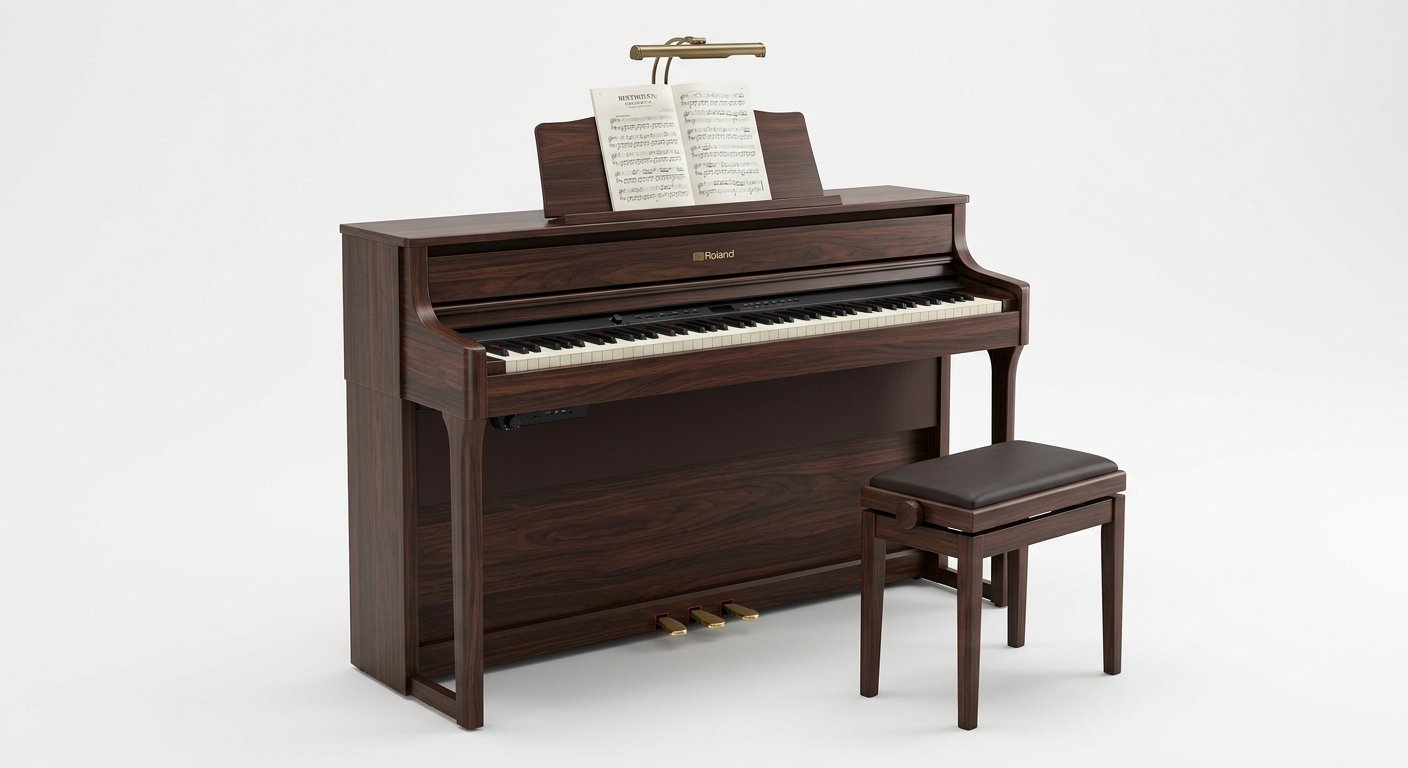
Everything above is a portable slab that needs a stand. The YDP-145 (~$1199) is a console piano: a proper furniture cabinet with a sliding wooden key cover, a folding music desk, and three real pedals permanently attached.
That last point matters more than people expect. A portable ships with one sustain pedal; a console gives you sustain, sostenuto, and soft, which you will need for intermediate repertoire. The cabinet also houses a bigger speaker system, so the sound has body a slab cannot match.
Inside is Yamaha’s Graded Hammer Standard action and the CFX concert grand sample. There is no Bluetooth and only 10 voices, this is a piano, not a workstation.
Who should buy it: anyone with a permanent home for the instrument who wants three pedals and a real cabinet.
Watch out for: it is furniture, so it does not travel, and GHS is a step below GHC.
Yamaha YDP-145 Arius
A furniture-style console with three real pedals, a sliding key cover, and Yamaha’s CFX grand sample.
Check Price on AmazonHow to Choose a Digital Piano with Weighted Keys
Key action comes first, everything else second
This is the whole ballgame. Roland’s PHA-4 is heavier and has escapement. Kawai’s RHC is smoother and more organic. Yamaha’s GHC is lighter and faster. Casio’s Smart Scaled Hammer is lightest with short travel. None is objectively best, but they feel meaningfully different, and the right one is personal. If there is any way to play a few in a store, do it.
Polyphony
Polyphony is how many notes can sound at once, including notes still ringing under the sustain pedal. 128 notes is the practical minimum; 192 or 256 is comfortable. Below 128 you will hear notes cut off during heavy pedalling. Roland’s SuperNATURAL modelling sidesteps this with effectively unlimited piano polyphony.
Sound engine
Yamaha samples its CFX grand, Kawai the Shigeru SK-EX, Roland models rather than samples. Kawai and Yamaha lead on pure acoustic realism. Listen on headphones before deciding, speaker demos on a phone tell you nothing.
Portable slab or console cabinet
A portable is cheaper, moves, and gigs, but ships with one pedal and needs a stand. A console has three pedals, better speakers, and looks like furniture, but it lives in one room forever. If the piano will never leave your house, a console is the better instrument for the money.
Connectivity
Every piano here has USB-MIDI, so any of them doubles as an 88-key MIDI controller for your DAW. Bluetooth MIDI and audio (Roland FP-30X, Casio PX-S series) let you connect wirelessly to learning apps and stream backing tracks through the speakers.
Frequently Asked Questions
What are the best digital pianos with weighted keys in 2026?
What is the difference between weighted and semi-weighted keys?
What does graded hammer action mean?
Do I really need weighted keys to learn piano?
What is the cheapest digital piano with real weighted keys?
How much polyphony do I need on a digital piano?
The Bottom Line
The Roland FP-30X is the best digital piano with weighted keys for most players in 2026: the PHA-4 Standard action, with escapement and ivory-feel keytops, is the most convincing keybed at a sane price. If tone matters more than heft, the Kawai ES120 is the most musical instrument here. The Yamaha P-225 is the safest mid-budget buy, the Roland FP-10 gives you a flagship keybed for under $600, and the Korg B2 is the cheapest real weighted piano you can buy.
Ignore the voice counts and the feature lists. Look for the words hammer action and graded, play a few if you can, and buy the one that feels right under your hands. Everything else is negotiable.
For more, see our guides to the best digital piano under $1000, the best 61 key keyboard piano if you want something smaller and cheaper, and the best 88-key MIDI controller if production is your focus.