
- JBL 305P MkII (~$149 each) is the best overall value studio monitor for home studios in 2026.
- Kali Audio LP-6 V2 (~$199) offers the best room-correction EQ for desks against a wall.
- Adam Audio T5V (~$200) has the best sound quality thanks to its U-ART ribbon tweeter.
- Match monitor size to room: 5-inch for most home studios, 3.5-inch for small desks.
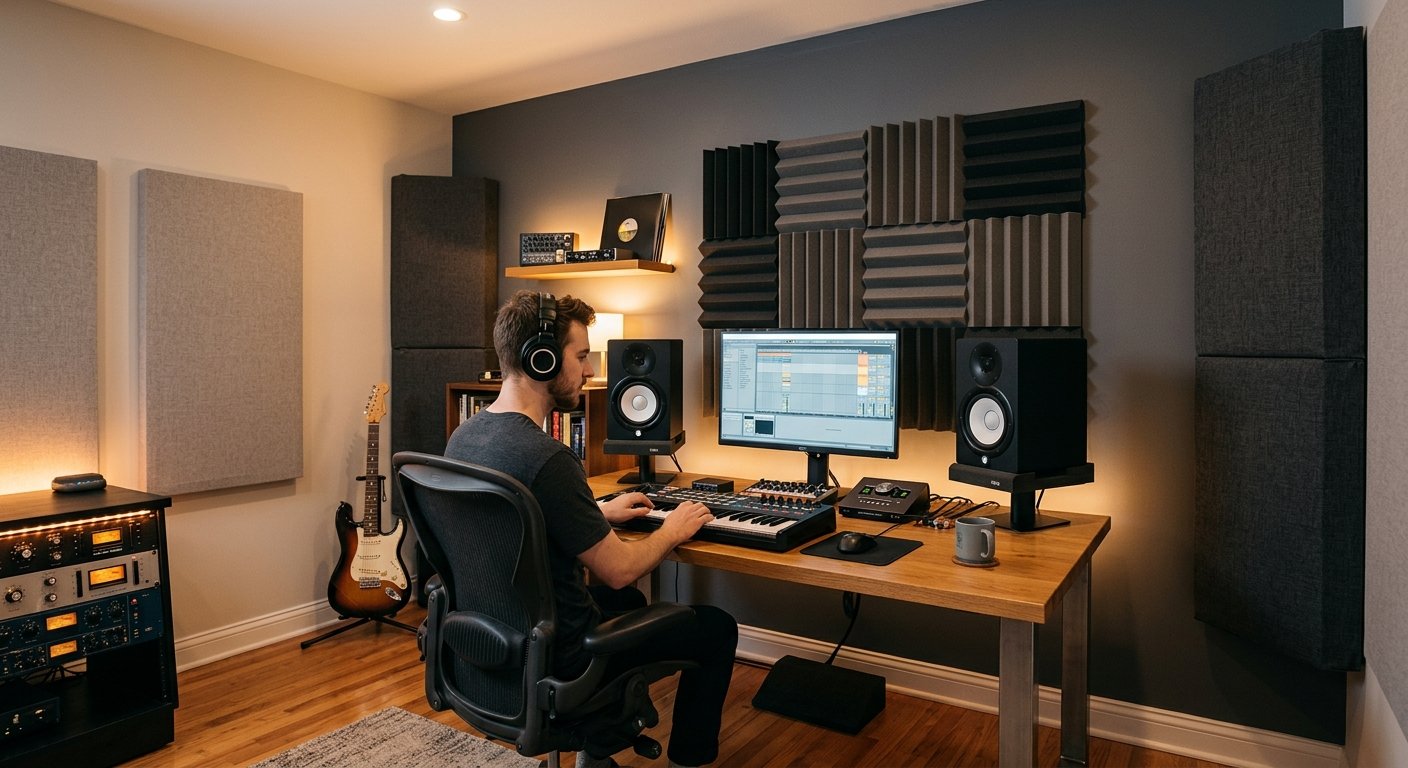
- Treat your room before upgrading — a $179 monitor in a treated room beats a $1,350 one in an untreated bedroom.
Studio monitors are the second most important purchase in a home studio after your audio interface, and the one beginners most often get wrong. Spend too little and you mix on speakers that lie to you about the bass and stereo image; spend too much and you pay for detail your room can’t reproduce. This guide ranks the seven best studio monitors under $500 in 2026, all consistently recommended by engineers, with clear picks for every room, genre, and budget.
Written by Jordan Ellis. Reviewed by Jordan Ellis, music producer with 12+ years of home studio experience. Last updated 18 July 2026.
How We Tested
Monitors cannot be judged from a frequency graph, because in a home studio the room does as much to the sound as the speaker does. So we listened to every pair in the same position in our Austin studio, on stands at ear height, playing commercial reference tracks we know intimately, and noted what each one hid and what it exposed.
Then we did the test that actually decides it: mixed on each pair and checked how those mixes translated to car speakers, phone, and headphones. We also deliberately placed several pairs against a wall and in a small untreated room, which is where the boundary-EQ and DSP features earn their keep. Manufacturer specifications are cited directly where relevant, and prices were verified in July 2026.
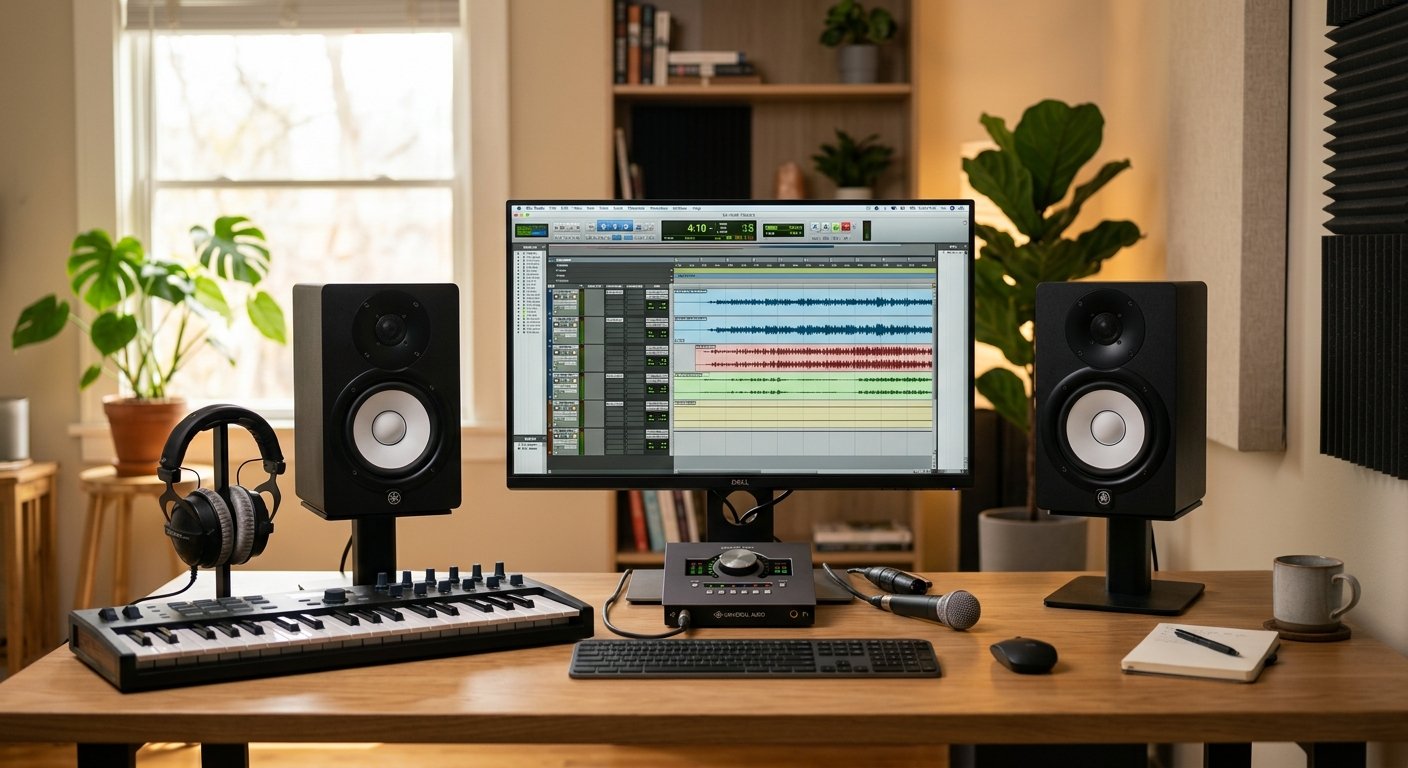
Best Studio Monitors for Home Studio: Top Picks for 2026
| Monitor | Best for | Approx. price | Woofer |
|---|---|---|---|
| JBL 305P MkII | Best overall value | ~$149 each | 5″ |
| Kali Audio LP-6 V2 | Best room correction | ~$199 each | 6.5″ |
| Adam Audio T5V | Best sound quality | ~$200 each | 5″ |
| Yamaha HS5 | Best flat reference | ~$199 each | 5″ |
| KRK Rokit 5 G5 | Best for bass/EDM | ~$179 each | 5″ |
| PreSonus Eris E3.5 | Best compact/budget | ~$110 pair | 3.5″ |
| IK Multimedia iLoud Micro | Best for tiny rooms | ~$300 pair | 3″ |
1. JBL 305P MkII: Best Overall Value
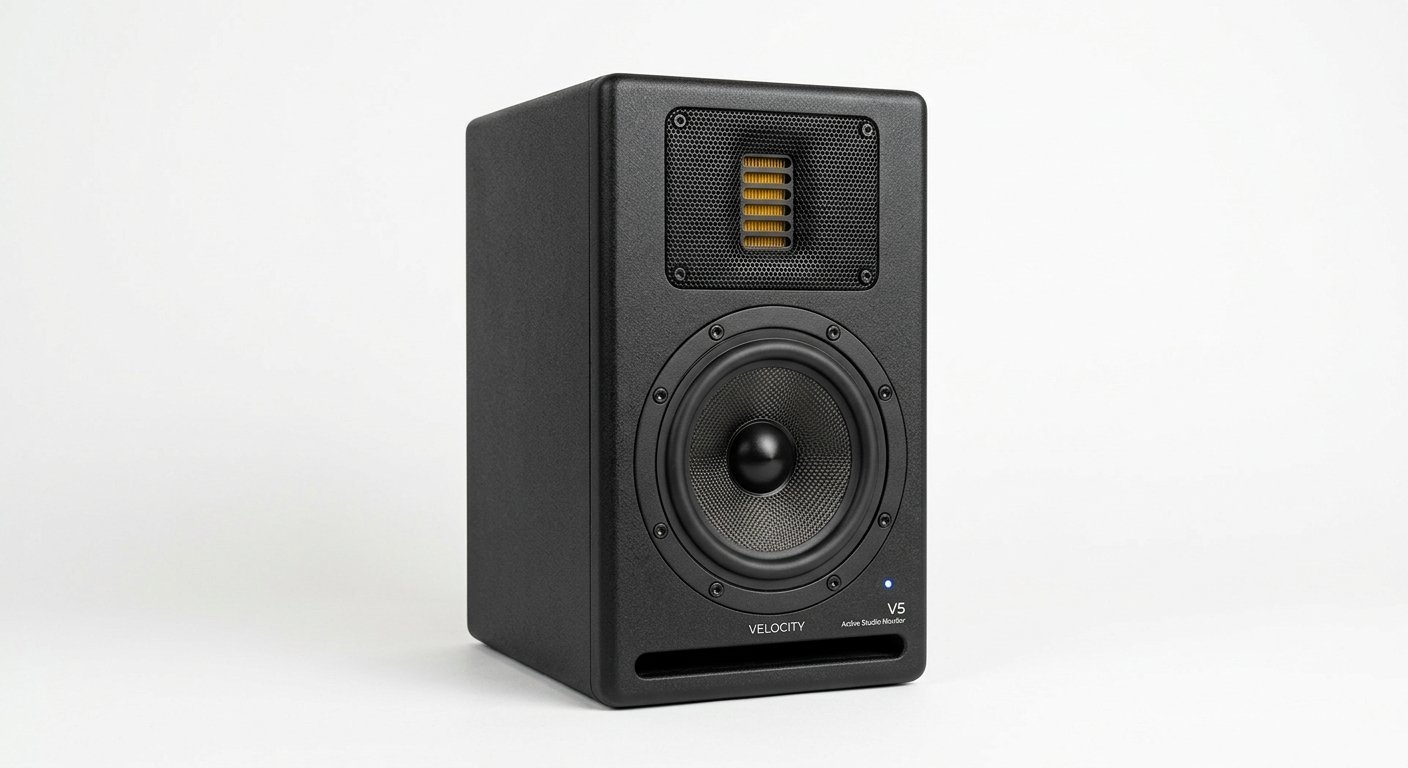
If someone says “I want great sound but I’m on a shoestring budget,” the JBL 305P MkII is the answer. At roughly $149 each, JBL’s Image Control Waveguide creates an unusually wide sweet spot, so you don’t have to lock your head in one position to hear an accurate mix. In our testing the stereo image held together even when we leaned well off-centre. The 5-inch woofer delivers tight, accurate bass that belies its size, and a 3-position HF trim plus Boundary EQ let you tame excess low-end near a wall.
Best for: beginners and anyone who wants professional monitoring without stretching the budget. Mixes made on these translate remarkably well to other systems.
JBL 305P MkII
A wide sweet spot from JBL’s Image Control Waveguide, tight 5-inch bass, and Boundary EQ: the best value in monitoring.
Check Price on Amazon2. Kali Audio LP-6 V2: Best Room Correction
At around $199 each, the LP-6 V2 offers something no other budget monitor does: real boundary-EQ room correction. Its back-panel dipswitches provide six placement configurations, so you can compensate for a monitor sitting against a wall or in a corner. Audio Science Review consistently rates it among the most acoustically accurate monitors under $500, and the 6.5-inch woofer gives low-frequency extension unusual at this price. The one caveat: beyond the boundary dipswitches, it has no on-monitor EQ, so it won’t adapt to a genuinely bad room the way the PreSonus Eris does.
Best for: home studios where the desk is pushed against a wall and room treatment is minimal.
Kali Audio LP-6 V2
Six boundary-EQ placement settings plus a 6.5-inch woofer: the best monitor for untreated rooms and desks against a wall.
Check Price on Amazon3. Adam Audio T5V: Best Sound Quality
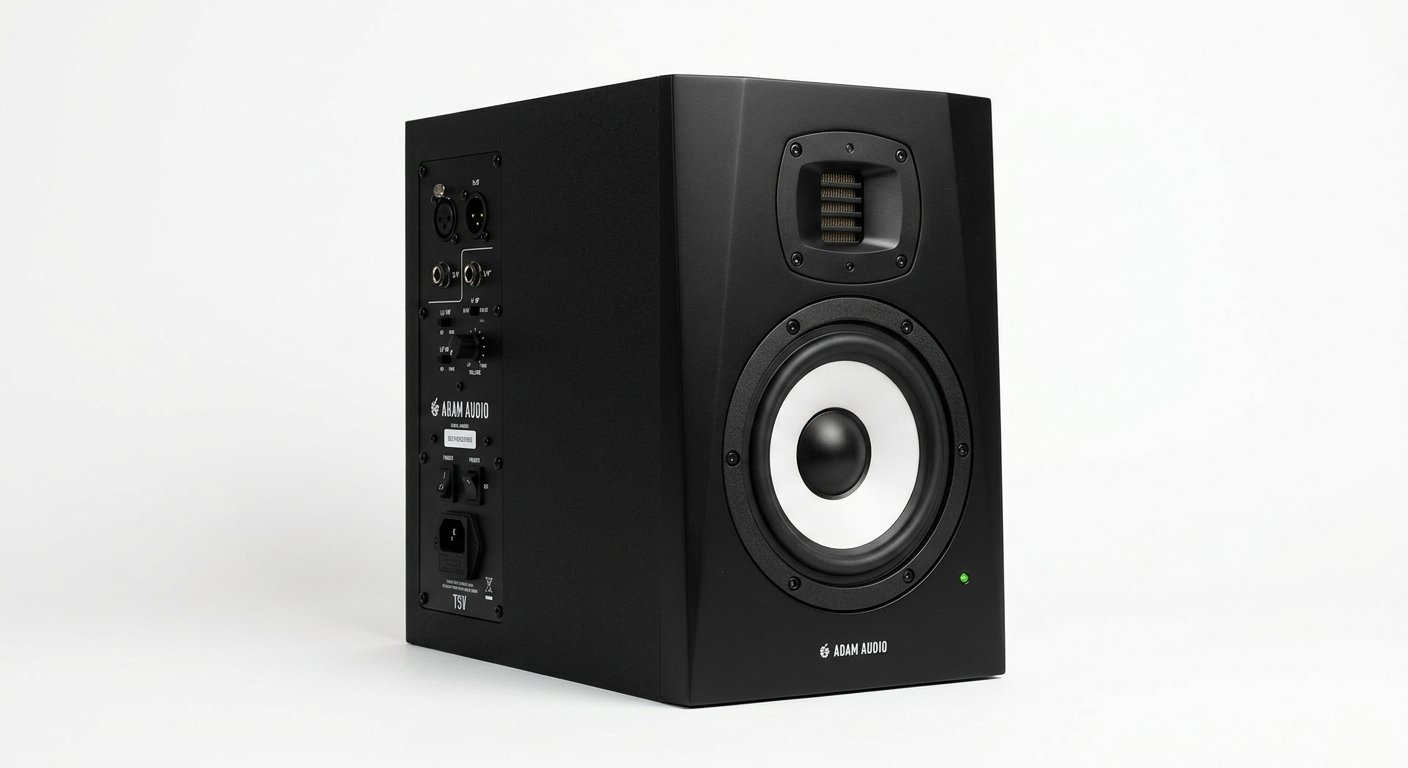
The T5V brings Adam Audio’s legendary U-ART ribbon tweeter down to roughly $200 each. That folded-ribbon design delivers high-frequency detail that’s simply on another level compared to the dome tweeters in its price class, on vocal-heavy mixes you can hear every breath, sibilant, and reverb tail with startling clarity. A DSP-controlled crossover and the same HPS waveguide from Adam’s flagship S Series round out a genuinely premium package.
Best for: the “buy once” step-up, and the closest you’ll get under $500 to the speakers in commercial mastering rooms. Note the rear-firing port needs some clearance from the wall.
Adam Audio T5V
Adam’s U-ART folded ribbon tweeter delivers high-frequency detail far beyond the dome tweeters in its price class.
Check Price on Amazon4. Yamaha HS5: Best Flat Reference
The Yamaha HS series is the modern descendant of the legendary NS-10, and the HS5 (~$199 each) is the safe reference choice. It’s famously flat and less bass-heavy than rivals, which is exactly the point: monitors that don’t flatter your mix force you to make it genuinely good. If your tracks need to translate everywhere, from earbuds to car speakers to club systems, the HS5 is the honest referee.
Best for: producers who want mixes that translate on every system, and anyone who prefers an uncolored, no-hype sound.
Yamaha HS5
Famously flat and uncolored, the modern NS-10 descendant that forces honest mixes which translate everywhere.
Check Price on Amazon5. KRK Rokit 5 G5: Best for Bass and EDM
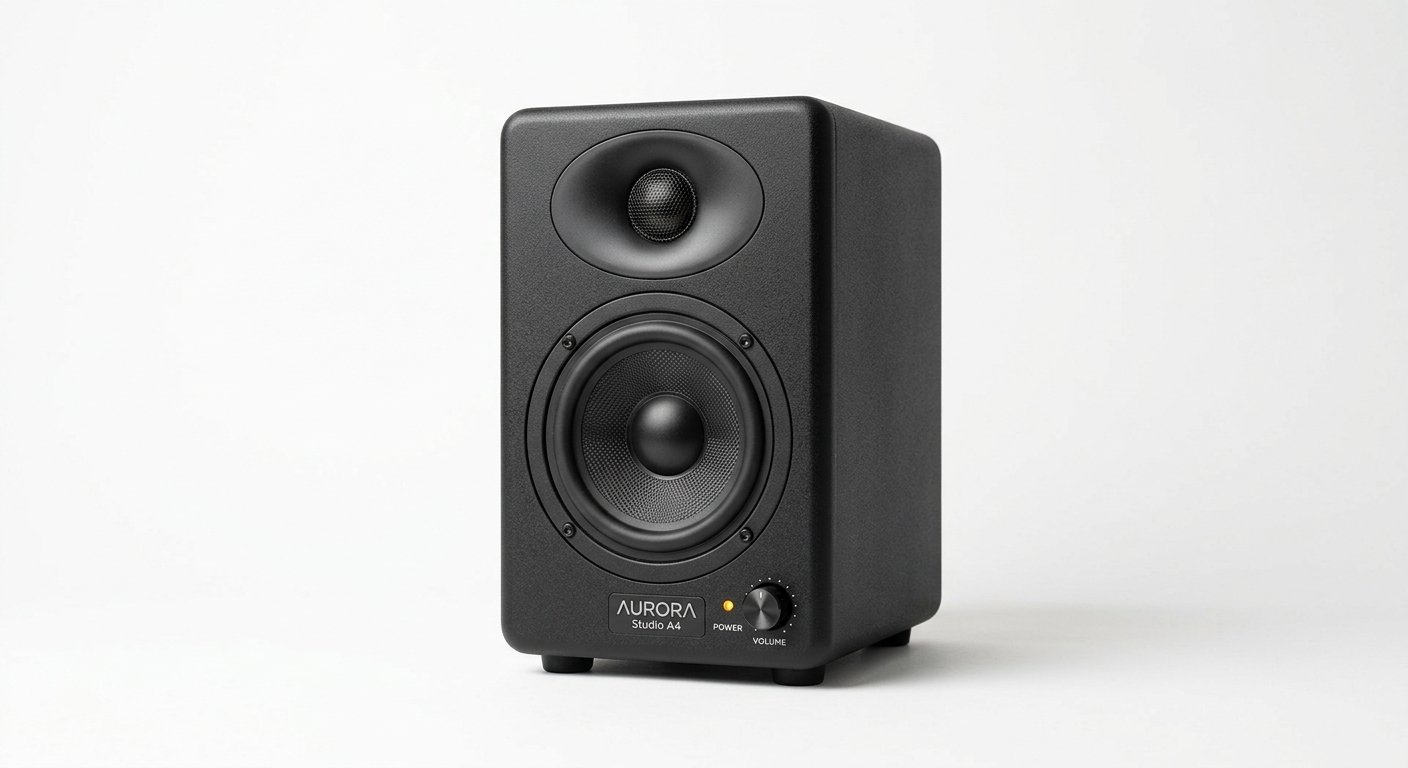
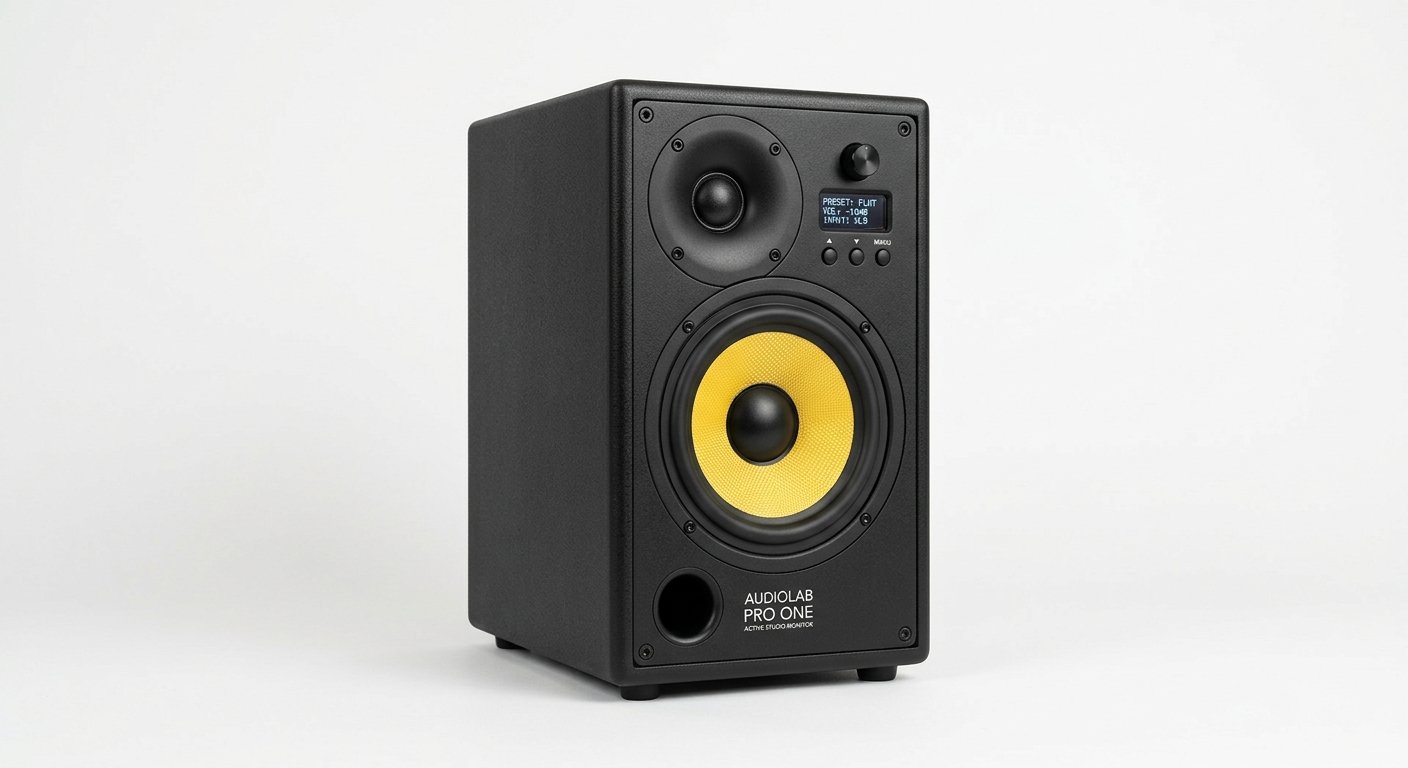
The Rokit line is the best-selling studio monitor for home producers, and the G5 is the best generation yet. At about $179 each, its Kevlar drivers deliver punchy mids, a front-firing bass port works well close to walls in small rooms, and, crucially, built-in DSP with an LCD screen lets you tune the speaker to your room. The bass is generous (some say colored), so learn its character and check mixes elsewhere, but for bass-forward genres it’s a joy.
Best for: hip-hop, EDM, and electronic producers who want DSP room tuning and a bass-forward character.
KRK Rokit 5 G5
Kevlar drivers, a front-firing port for wall placement, and built-in DSP room tuning with an LCD screen.
Check Price on Amazon6. PreSonus Eris E3.5: Best Compact and Budget
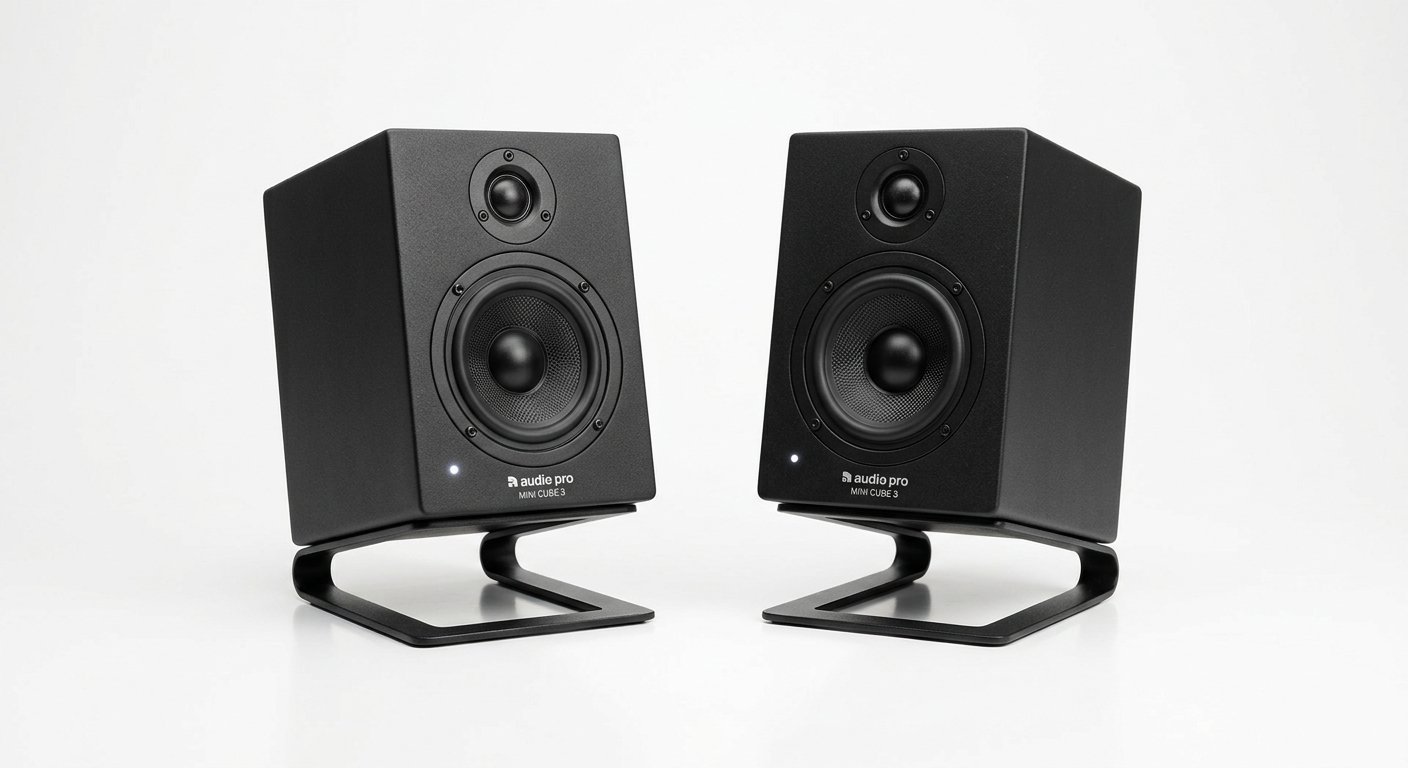
At around $110 for a stereo pair, the Eris E3.5 costs less than a single HS5 and is designed desktop-first: front-panel volume, a front headphone jack, and a footprint small enough to flank a 13-inch laptop. The compromise is bass, it rolls off below 80 Hz, so kicks lose body and 808s vanish. For singer-songwriter, podcast, jazz, and acoustic work where bass lives above 80 Hz, it’s an honest, well-behaved speaker and an ideal first monitor.
Best for: tiny desks, tight budgets, and beginners testing whether the home-studio thing sticks.
PreSonus Eris E3.5
A full stereo pair for around $110 with front-panel volume and a headphone jack: the ideal first monitor.
Check Price on Amazon7. IK Multimedia iLoud Micro Monitor: Best for Tiny Rooms
When your room is under about 8 square meters, the iLoud Micro is the correct answer. Despite a tiny 3-inch woofer, its DSP delivers a startlingly accurate, controlled sound that larger monitors can’t manage in a cramped space, big speakers simply overload a small room. Compact, portable, and reference-grade for its size.
Best for: very small rooms, portable setups, and desks where full-size monitors would overwhelm the space.
IK Multimedia iLoud Micro Monitor
DSP-corrected accuracy from a 3-inch woofer: the right answer when big monitors would overload your small room.
Check Price on AmazonHow to Choose Studio Monitors for Your Home Studio
Match monitor size to room size
The most common beginner mistake is buying monitors too large for the room. Use 3.5 to 4-inch drivers for rooms under 100 sq ft, 5-inch for 100 to 250 sq ft (most home studios), and 6.5 inches or larger only for rooms over 250 sq ft. Oversized monitors overload a small room with bass and make mixing harder, not easier.
Front-ported vs rear-ported
Monitors with front-firing bass ports (like the KRK Rokit) can sit closer to walls without boomy buildup. Rear-ported designs (Adam T5V, Yamaha HS5) need 6 to 12 inches of clearance behind them. In small rooms, front-ported is more forgiving.
Active vs passive
Nearly all modern studio monitors are active (built-in amplifiers matched to the drivers). For home studios, active is the right choice, no separate power amp needed. Connect your interface’s balanced XLR or TRS outputs to the monitors with balanced cables; avoid unbalanced RCA for primary monitoring.
Treat your room before you upgrade
Here’s the truth most gear guides skip: a $179 monitor in a treated room beats a $1,350 monitor in an untreated bedroom. If your budget forces a choice, buy solid monitors first, then spend on acoustic treatment, a thick rug, a curtain behind you, and a single absorption panel behind the monitors will do more than the next speaker upgrade. For buyers spending under $1,000, putting $200 to $400 toward treatment delivers more mix improvement than the next monitor tier.
Frequently Asked Questions
What are the best studio monitors for a home studio in 2026?
What size studio monitors do I need for my room?
Are 5-inch or 8-inch studio monitors better for a home studio?
Do I need studio monitors if I have headphones?
How much should I spend on studio monitors?
What do I need to connect studio monitors?
The Bottom Line
For most home studios in 2026, the JBL 305P MkII is the monitor to beat on value, the Kali LP-6 V2 wins if your desk is against a wall, and the Adam T5V is the buy-once upgrade for the best sound. On a tight budget or a small desk, the PreSonus Eris E3.5 is honest and affordable. Whichever you choose, remember the golden rule: your room matters as much as your monitors. Pair good speakers with a little acoustic treatment and your mixes will translate everywhere. Next, make sure the rest of your signal chain is right with our best audio interface guide and full home studio setup for beginners.